
Meta Cuts Ties with Sama Amid Smart Glasses Privacy Concerns

Meta's decision to terminate a major contract with Sama, formerly known as Samasource, highlights the complex commercial challenges facing technology companies as they navigate AI development and data privacy concerns. The move raises questions about how businesses balance growth strategies with operational risks in an increasingly scrutinised market.
The partnership between Meta and the training-data specialist began in 2017, with Sama providing data labelling and AI model training services. However, this commercial relationship has now come to an abrupt end, with significant implications for both companies' business operations.
Commercial impact of contract termination
The contract cancellation could result in 1,108 Sama employees losing their positions, predominantly those based in Nairobi, Kenya. The workers received just six days' notice of the redundancies, a timeline that has attracted attention given that many were already involved in a US$1.6bn lawsuit against Meta concerning alleged poor working conditions and mental health trauma from previous content moderation work.
According to Sama, the company has "consistently met the operational, security and quality standards required across our client engagements, including with Meta". The firm added that "at no point were we notified of any failure to meet those standards, and we stand firmly behind the quality and integrity of our work".
The business rationale behind the partnership involved subcontracted workers reviewing content, including films and images captured by Meta's smart glasses, to "improve people's experience with the glasses," as stated in our Privacy Policy, a Meta spokesperson tells the BBC.
Market expansion and product development
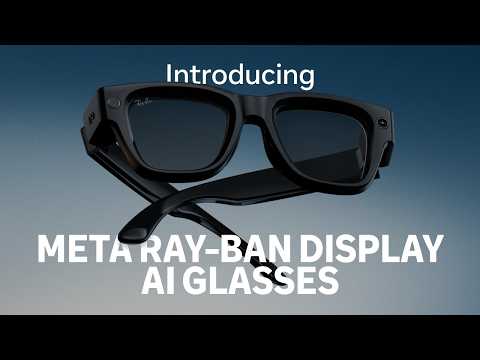
In September, Meta unveiled a line of AI-powered glasses developed in partnership with Ray-Ban and Oakley, representing a significant expansion of the company's product portfolio. These wearable devices use AI to interpret captured images and sounds, offering features such as text translation and real-time information about the user's surroundings.
The technology could prove particularly valuable for people who are blind or partially sighted, potentially opening new market segments for Meta's hardware division. The glasses include a transparency feature, with frames incorporating a small indicator light that illuminates when the built-in camera is actively recording.
The smart glasses represent Meta's continued investment in wearable technology and augmented reality, positioning the company to compete in the emerging market for AI-enhanced consumer devices. This product line forms part of Meta's broader strategy to diversify beyond social media platforms and establish a presence in next-generation computing hardware.
However, an investigation by Swedish newspapers Svenska Dagbladet and Gotesborgs-Posten in February 2024 reported that private footage from glasses-wearers, including clips of them having sex or using the toilet, is sometimes viewed by Sama workers.
Operational challenges and regulatory scrutiny
The content review process involved Sama workers examining transcripts of interactions with the AI to verify adequate responses to user questions. According to Meta, all faces are blurred in content for reviewing purposes, though filtering sometimes fails, particularly in low-light settings or when the camera is moving quickly, Svenska Dagbladet reported that Sama staff said.
The Information Commissioner's Office (ICO) tells the BBC in March 2024 that "devices processing personal data, including smart glasses, should put users in control and provide for appropriate transparency. Service providers must clearly explain what data is collected and how it is used."

The ICO wrote to Meta to request information on how it is meeting its obligations under UK data protection law, adding another layer of regulatory complexity to the company's business operations.
Meta said: "Unless users choose to share media they've captured with Meta or others, that media stays on the user's device. When people share content with Meta AI, we sometimes use contractors to review this data for the purpose of improving people's experience, as many other companies do."
As Meta transitions away from its partnership with Sama, the decision reflects broader strategic considerations about how technology companies manage their supply chains and outsourcing relationships. The move could indicate a shift in Meta's operational approach as it seeks to balance product development with privacy concerns and regulatory requirements, whilst leaving displaced workers and questions about the commercial sustainability of such partnerships.