How does Goldman Sachs' CEO Think AI will Impact Hiring?

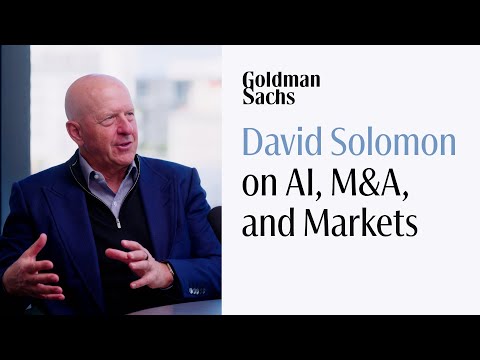
David Solomon, Chairman and CEO of Goldman Sachs, is positioning AI as a catalyst for growth rather than a driver of mass job losses.
Speaking on the Goldman Sachs Exchanges podcast, he argued that technology has long reshaped work without permanently shrinking employment, and that AI will follow the same pattern.
David said: “Technology has been disrupting jobs, changing the way people work, destroying jobs and forcing us as a vibrant economy to create new jobs for decades.”
This framing anchors the firm’s OneGS 3.0 programme – an AI-led effort to enrich the employee experience, strengthen resilience and drive productivity – paired with near-term headcount restraint to reconfigure teams and embed the right capabilities.
Solomon expects that as AI expands client reach and throughput, it will create capacity to invest in growth areas and, over time, support long-term employee growth.
AI as a productivity driver
This view aligns with other leaders across industries. Mark Dixon, CEO of IWG, suggests that AI will accelerate companies’ development and create more work – albeit different work –saying that, from his perspective, "everyone is focused on productivity".
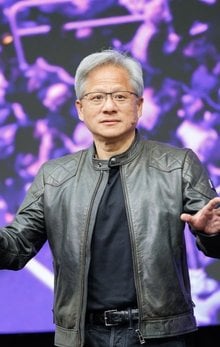
Jensen Huang, CEO of NVIDIA, agrees.
At the World Economic Forum, he pointed to radiology as a telling case: the number of radiologists has grown as AI increases diagnostic speed, with Jensen saying that these developments in technology are giving radiologists more time to spend with patients rather than reducing headcounts.
The emerging consensus is that AI's increase in productivity, when successfully reinvested, leads to growth.
For leaders, the focus is less about trimming workforce and more about reorienting capacity toward higher-value activities, deeper client coverage, faster product cycles and new market segments.
The operating model shift: complexity now, differentiation later
David also cautions that execution will be harder than it looks, and a “recalibration” of expectations is likely.
Embedding AI at scale is less about discrete pilots and more about rewiring the operating model by standardising data, integrating models into core workflows and equipping teams to work effectively with new tools.
This complexity explains why some enterprises are tightening hiring in the short term while keeping an eye on long-term expansion as value materialises.
While total employment may hold steady or grow, jobs themselves may change – with a greater emphasis on judgment, client engagement and exception handling – as demand for AI-fluent operators, product managers and risk specialists rises.
AI governance will also likely be a key challenge for businesses, with regulators and boards expecting clear standards for accuracy and bias prevention to elevate trust.
Companies that can absorb AI into daily work rather than run it as a side project will likely expand capacity without equivalent increases in cost, supporting margin resilience in a high-cost environment.
Organisations that do overestimate the capabilities of AI, by significantly reducing headcount or underestimating the complexity of integrating new technologies, may struggle.
As David suggests, companies that meaningfully implement AI will see a profound change in the way they work, accelerate their output and create conditions for sustainable growth – rather than reduce headcount.
Company portals


Executives
David Solomon
Chairman & Chief Executive Officer
Jensen Huang
Founder and CEO
Mark Dixon
Founder & Chief Executive Officer