AI, the C-Suite and the Race for Advantage in 2026

As 2025 has drawn to a close, one thing is clear: AI is no longer an emerging consideration for business leaders, it’s a defining force shaping leadership structures, competitive strategy and long-term growth plans.
The AI themes that dominated executive decision making in 2025 are set to intensify in 2026, with organisations moving towards formalised AI leadership, deeper strategic integration and the pursuit of competitive advantage at scale.
Strategic AI appointments become the norm
One of the clearest signals from 2025 is that AI leadership is moving decisively into the C-suite. Rather than being managed as a technology function alone, AI is increasingly overseen at the highest levels of corporate governance.
This trend is likely to accelerate in 2026 as businesses recognise that AI strategy touches every part of the organisation, from operations and product development to workforce planning and customer experience.
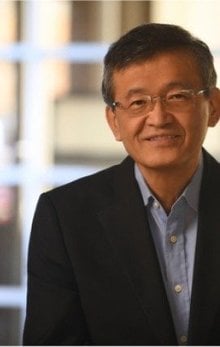
Several major companies have already set the tone. Intel’s CEO Lip-Bu Tan stepped in to assume direct responsibility for AI following the departure of its Chief Technology Officer demonstrated how crucial AI leadership has become in a highly competitive market.
Apple focused on restructuring its AI leadership team, which will come into play in 2026. The shift has focused on embedding AI more deeply into existing executive structures rather than creating new standalone roles.
Led by President John Giannandrea, who will be replaced by Amar Subramanya in the spring of 2026, AI teams working on machine learning, generative AI and Siri have been reorganised to align more closely with core software and product leadership.
This aims to accelerate development while supporting Apple’s priorities around privacy and ecosystem control.
Heading into 2026, business leaders are likely to follow these examples by creating new AI-focused executive roles, expanding board-level oversight and embedding AI leadership responsibilities across exec positions.
AI as a competitive advantage
Beyond leadership structures, 2025 has also shown that AI is becoming a primary source of competitive advantage.
This theme is likely to dominate boardroom discussions in 2026 as companies seek to differentiate themselves in increasingly crowded markets.
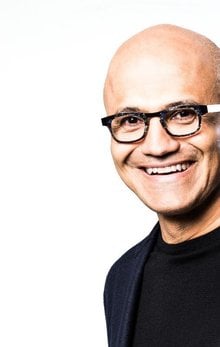
Few leaders have articulated their vision more clearly than Microsoft CEO Satya Nadella.
His AI-centred strategy positions innovation as the engine of Microsoft’s growth era, with AI embedded across platforms, products and services rather than treated as a standalone offering.
In his 2025 letter to shareholders, the CEO said: “More than any transformation before it, this generation of AI is radically changing every layer of the tech stack, and we are changing wih it.”
Under Satya’s leadership, Microsoft operates hundreds of data centres worldwide and has embedded AI deeply across platforms through products such as the Copilot family, which now serves tens of millions of users.
This extensive infrastructure investment underscores how access to platforms and models is becoming central to competitive positioning, not just within technology companies but across industries that rely on AI to innovate and scale.
The hardware race behind AI growth
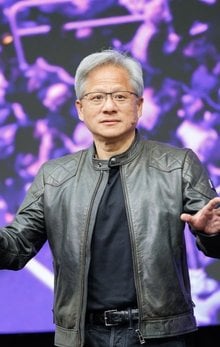
Infrastructure has also emerged as a strategic battleground. As demand for large-scale model training and deployment accelerates, Nvidia’s role as a provider of AI chips and systems have become central to the global AI ecosystem.
Nvidia CEO Jensen Huang has described AI as “the new electricity”, underscoring how fundamental infrastructure will play a large part in the future of economic growth.
Partnerships between AI developers and infrastructure providers further highlight this shift. Collaborations between OpenAI and Nvidia point to a future in which competitive advantage depends on not only software innovation, but also on securing the hardware, energy and data-centre capacity required to operate at scale.
Heading into 2026, business leaders are increasingly recognising that AI success will be shaped as much by infrastructure as by algorithms.




Executives
Jensen Huang
Founder and CEO
John Giannandrea
SVP Machine Learning and AI Strategy
Lip-Bu Tan
Chief Executive Officer
Satya Nadella
Chairman and CEO