Are AI & Robotics Solutions to US Debt? Elon Musk Thinks So
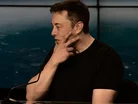
Elon Musk, the multi-CEO of Tesla, SpaceX and xAI, says that AI and robotics can address the US' massive US$38tn national debt.
Speaking in a conversation with investor and podcaster Nikhil Kamath, published on 30 November, the potential trillionaire said: “As long as civilisation keeps advancing, we will have AI and robotics at a very large scale. I think that’s pretty much the only thing that’s going to solve the US debt crisis.
“Because, currently, the US debt is insanely high and the interest payments on the debt exceed the entire military budget of the United States.”
It’s widely reported that economists aren’t necessarily worried about the level of debt, but it's the interest payments and how this impacts the debt-to-GDP ratio which concerns them.
According to the fiscal data website of the US government, as of October 2025, it costs US$104bn to maintain the debt, which is 15% of total federal spending in fiscal year 2026. The total interest paid on the debt for fiscal year 2025 was US$1.22tn.
Technological transformation or deflation
Elon said that the surge of AI and robotics will cause a “dramatic increase in the outputs of goods and services” - which would in turn be expected to grow the economy, causing GDP to grow at a faster rate than debt.
However, he said that this will likely lead to a “significant deflation” as: “If you have AI and robotics, and a dramatic increase in the output of goods and services, probably you will have deflation.
“That seems likely because you simply won’t be able to increase the money supply as fast as you increase the output of goods and services.”
According to Elon, AI has not yet made enough of an impact on productivity to increase the goods and services faster than the increase in the money supply.
He said: “The US is increasing money supply quite substantially with deficits that are on the order of two trillion dollars. So you have to have goods and services output increase more than that in order to not have inflation.
“So we’re not there yet, but if you say ‘How long would it take us to get there?’, I think it’s three years… before goods and services output will exceed the rate of inflation.”

Forget the four day work week
From the perspective of employees, the CEO predicts that advancements in AI and robotics will change the way people work altogether.
In the same conversation with Nikhil, he said: “In less than 20 years, but even maybe as little as 10 or 15 years, the advancements in AI and robotics will bring us to the point where working is optional.
Nikhil addressed that parts of the world are already seeing a shift to a shorter workweek as a result already, but Elon suggests that work will become more of a personal choice, almost a hobby.
The CEO said: “In the same way that you can grow your own vegetables in your garden or you could go to the store and buy vegetables. It’s much harder to grow your own vegetables but some people like to grow their vegetables.”
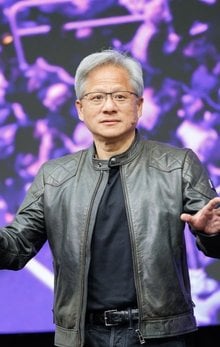
He’s not alone in his predictions about the power AI will hold in this area. Nvidia CEO Jensen Huang has said that its rapid adoption across industries could bring about a transition to four-day workweeks.
Speaking at a US Saudi Investment Forum alongside Elon, he said: “If your life becomes more productive and if the things that you’re doing with great difficulty become simpler, it is very likely because you have so many ideas you’ll have more time to pursue things.”
It’s impossible to predict how AI and robotics will be able to change the state of the US economy with its fast-evolving presence, however it is opening doors and changing the ways people can navigate within the financial system.