Are AI CEOs Really the Next High-Level Business Advisers?

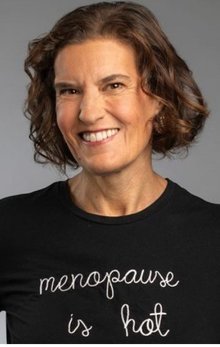
Joanna Strober, Co-Founder and CEO of Midi Health, has found an unconventional yet powerful source of mentorship: artificial intelligence.
Speaking on the latest episode of the CNBC Changemakers and Power Players podcasts, she shares how she speaks with AI-generated versions of legendary business figures, like venture capitalist John Doerr and the late former YouTube CEO Susan Wojcicki, through ChatGPT.
What began as an experiment has become an integral part of how Joanna refines her business strategy and leadership vision.
A one-time venture capitalist herself, Joanna launched Midi Health in 2021 to address the unmet needs of women navigating midlife health challenges.
The startup now operates a network of over 400 women’s health specialists and has served more than 200,000 patients.
With high-profile investors including Amy Schumer and Tory Burch, Midi has reached an annual revenue run rate of US$150m. Joanna’s innovation and leadership earned her a spot on CNBC’s 2025 Changemakers list.
Turning to AI for strategic guidance
While planning Midi’s next phase of growth, Joanna turned to AI for guidance on her company’s “Objectives and Key Results” (OKRs), a goal-setting framework popularised by John.
On a recent flight, she spent eight hours in conversation with an AI version of John, iterating through her business milestones.
“I got feedback over and over again on the OKRs I came up with,” she told CNBC’s Julia Boorstin. “Finally, he liked them, and it was very nice.”
The realism of these exchanges owes much to the vast library of John’s public work, including his bestselling book Measure What Matters, his interviews and speeches, which allows the chatbot to emulate his insights convincingly.
Joanna even customises the experience, asking for a “nice John Doerr” or a “harsh John Doerr,” adjusting the tone of the feedback depending on her needs.
Beyond the professional mentorship, Joanna turned to AI for something deeply personal. She created an AI version of her late friend Susan Wojcicki, who died in 2024. Susan’s career at Google and YouTube had always inspired Joanna, and hearing 'Susan’s' advice again was emotional.
“Her advice was so good,” she recalled. “I was very emotional on the plane when she said, ‘These are pretty good, but I might think about this.’”
For Joanna, blending human experience with AI insight isn’t just novel, it’s transformative. In her words: “It was actually very valuable to have her giving me advice.”

The rise of digital mentors
The movement toward AI replicas is accelerating, with figures like billionaire investor Ray Dalio now creating digital versions of themselves to share wisdom on demand.
Ray’s “Digital Ray,” an AI clone trained on decades of his work at Bridgewater Associates and his Principles philosophy, is designed to converse endlessly with users seeking career or investment advice, he shared on X in October.
He describes it as 95% as effective as speaking with him directly about life and work, and 80% as capable in discussing markets and economics, numbers that may rise as he continues training the model.
Ray’s aim mirrors Joanna’s motivation, to use AI to extend mentorship beyond human limits.
Yet as these digital clones become more lifelike, ethical and emotional questions grow sharper.
While Ray consented to his replication, others, like Zelda Williams and Scarlett Johansson, have spoken out against unauthorised digital likenesses of loved ones or themselves.
The contrast underscores an ongoing debate about the use of the technology: AI can immortalise ideas and extend influence, but it can also blur consent and identity.
As both Joanna and Ray illustrate, humanity’s next leap in mentorship and memory could come not from living voices, but from carefully designed digital reflections.
Company portals


Executives
Joanna Strober
Founder
John Doerr
Partner