
CEO Gary Nagle Explains Mining Giant Glencore's New Focus
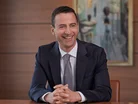
Glencore is refocusing its strategic efforts on a massive copper-led growth plan following the collapse of merger talks with Rio Tinto.
The proposed combination would have created the world’s largest mining company with a market value exceeding US$260bn, but negotiations ended after the firms failed to agree on terms.
Glencore is now pressing ahead independently, targeting production of 1.6 million tonnes of copper by 2035. This would position the Swiss giant as a global leader in metals essential for electric vehicles and renewable energy.
Despite a 6% slip in annual EBITDA to US$13.5bn, the company’s leadership remains confident in its standalone investment case.
Strong operational progress and accountability
The 2025 results showed clear operational momentum, particularly in the second half of the year. The company met its production guidance for key commodities for the second year in a row, a result of optimised and simplified operating structures.
“2025 was a year of significant progress, marked by a strong operational performance, continued portfolio optimisation and clear momentum for our copper-led growth strategy,” said Gary Nagle, CEO of Glencore.
Gary said that the simplified structures have increased accountability across the group’s global operations. This operational discipline is intended to de-risk the company's pathway towards its ambitious 2035 production targets.
Diversified giant with global footprint
Glencore, which was established in 1974 as a trading company, has operations in more than 30 countries and a workforce of about 140,000. It is a uniquely diversified business, supported by one of the industry's premier marketing franchises.
As the world’s largest listed coal producer and sixth-largest copper producer, Glencore is balancing the energy needs of today with the transition requirements of tomorrow.
The company recently decided to retain its coal business after a strategic review, as shareholders prioritised the division’s high profitability over a potential spin-off. This decision confirms the firm's focus on cash flow and value over structural changes.

Capital allocation and shareholder returns
Management has recommended an aggregate cash distribution of US$2bn for 2026, calculated from 2025 cash flows. This includes a top-up distribution linked to the company’s stake in New York-listed Bunge, which is treated as surplus capital.
“In line with our shareholder returns framework, a 2026 base distribution of US$10c/share (c.US$1.2bn) is calculated basis 2025 cash flows,” said Gary.
He explained that the Bunge shares, worth US$4bn, provide a healthy cushion for shareholder returns. This pay-out comes after a year where lower energy and coal prices were partially offset by stronger metals pricing in the second half.
Organic growth and portfolio optimisation
Glencore’s growth strategy is underpinned by a portfolio of capital-efficient brownfield projects. The company aims to exceed 1 million tonnes of copper production by 2028, with several key projects in the pipeline.
Portfolio optimisation has continued with the acquisition of the Quechua project in Peru and the disposal of non-core assets like the Pasar smelter.
“We have a clear pathway for our base copper business to exceed 1 million tonnes of annual production by the end of 2028,” said Gary, adding that, while the copper business is expected to self-fund its growth, the company remains open to value-accretive partnerships to further reduce financial risk.
Long-term vision for critical minerals
With projections showing a 50% increase in global copper demand by 2040, Glencore is positioning itself as a critical supplier for the energy transition and AI infrastructure.
The collapse of the Rio Tinto deal has not altered the company’s long-term objectives, but rather reinforced its commitment to its independent strategic framework.
“We are uniquely positioned to support the energy needs of today whilst providing many of the transition-enabling commodities the world needs,” said Gary.
He concluded by emphasising that the company remains focused on operating ethically and safely while progressing its organic growth options to create long-term value for its global shareholder base.

Executives
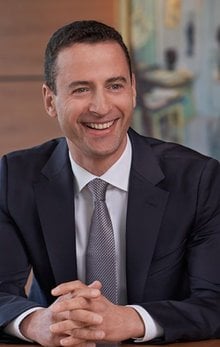
Gary Nagle
CEO