Will CEOs Press on With AI Spending Despite Uneven Returns?

Chief Executives are doubling down on AI even as many concede that returns so far have been inconsistent.
An annual survey by advisory firm Teneo shows that 68% of CEOs plan to increase AI spending in 2026, despite fewer than half of existing AI projects generating returns that exceed their costs.
The survey, conducted from mid-October to mid-November among more than 350 CEOs of public companies with revenue of at least US$1bn, follows a year in which AI investment worth trillions of dollars helped buoy global markets and the wider economy.
Yet, optimism about AI’s strategic importance is running ahead of its financial performance.
Respondents said AI has been most effective in marketing and customer service, while applications in higher-risk areas such as security, legal and human resources have proved more difficult.
Even so, many executives in the survey appear willing to tolerate weak early results in exchange for longer-term competitive advantage.

Investors want speed, CEOs show patience
The findings also highlight a divide between corporate leaders and investors over how quickly AI should pay off.
Among roughly 400 institutional investors surveyed by Teneo, 53% expect AI initiatives to begin delivering returns within six months.
That contrasts with the views of large-company CEOs: 84% of those running companies with revenue of US$10bn or more believe it will take longer than six months.
Expectations about employment also cut against common assumptions. Sixty-seven percent of CEOs surveyed believe AI will increase entry-level headcount, while 58% think it will increase senior leadership headcount, suggesting that many see AI as additive rather than purely automating roles away.
Beyond technology, the survey points to a more cautious outlook among leaders of large companies. Just 31% expect the global economy to improve in the first half of 2026, down from 51% a year earlier, reflecting concerns about global trade and geopolitical uncertainty.
Smaller-company CEOs were far more optimistic, with 80% expecting improvement in the new year.
At the same time, 78% of CEOs expect merger-and-acquisition activity to increase in 2026, building on a year in which global M&A volumes rose more than 40%, according to Dealogic.
Google builds the backbone
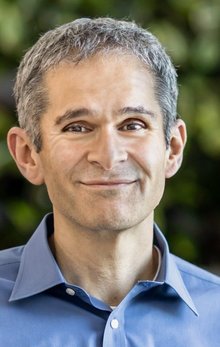
Among the most visible examples of continued AI investment is Google. The company has appointed long-time executive Amin Vahdat as Chief Technologist for AI Infrastructure, announced in an internal memo on 10 December.
The move comes as parent company Alphabet ramps up spending on data centres and hardware to support AI workloads, with capital expenditures expected to exceed US$90bn by the end of the year.
Google Cloud CEO Thomas Kurian said in an internal memo: “This change establishes AI Infrastructure as a key focus area for the company.”
The appointment underscores how control of computing capacity has become central to competition among the largest technology companies.
Google’s strategy emphasises scale and in-house innovation, including its custom-designed tensor processing units.
Rivals are making similarly large bets: Microsoft has invested heavily in data centres and its partnership with OpenAI, while Amazon continues to expand custom chip offerings for AWS.
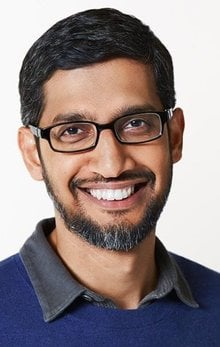
Google CEO Sundar Pichai has emphasised “disciplined spending”, supported by a cloud backlog of about US$155bn.
Across industries, the message from corporate leaders is consistent. Even with spotty returns today, AI is seen as too important to slow down.
Company portals




Executives
Amin Vahdat
Chief Technologist, AI Infrastructure and SVP
Sundar Pichai
CEO