
Open to All - But Will Business Leaders Attend COP30?
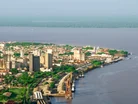
Following the controversy surrounding COP29 in Baku the international business community is turning its attention to Belém in Brazil for COP30.
The location in the Amazon basin is symbolic, holding significance for discussions on climate action. For corporate leaders and sustainability executives the conference from 10 to 21 November presents a critical juncture for climate policy and corporate responsibility. With more than 60,000 delegates expected, it is being positioned as the most important climate event since the 2015 Paris Agreement.
A change to focus minds
The choice of Belém, a city in the heart of the rainforest, is intended to focus minds.
As Helder Barbalho, Governor of host Pará state says: "COP30 is an opportunity to hold climate discussions surrounded by the world's largest rainforest." This setting, however, presents considerable logistical challenges.
The city has undergone major infrastructure upgrades, coordinated by federal, state and municipal authorities, to manage the influx of attendees.
These preparations are intended to provide lasting benefits to the region, but the immediate concerns for businesses attending are accessibility and the carbon footprint associated with travel to a remote location.

Corporate engagement and thematic opportunities
The COP30 presidency has structured the event around a detailed Thematic Days calendar covering more than 30 interconnected themes.
This programme is described as "a catalyst for implementation and inclusion". For business leaders, this comprehensive agenda offers numerous points for engagement.
Each thematic day will include high-level panels with government officials, corporate representatives and civil society members.
The breadth of topics, from energy, finance, and agriculture signals a recognition that climate action must be integrated across all economic sectors. This allows for targeted corporate engagement and the development of cross-industry partnerships.
- Location: Belém, Pará, Brazil – the first COP held in the Amazon basin
- Dates: 10-21 November 2025, with a pre-summit on 6-7 November
- Expected attendance: Over 60,000 participants from 200 countries
- Thematic focus: More than 30 interconnected climate themes
- Mutirão: Delegates will work as a group on a shared task
- Infrastructure: A four-lane highway being built through the Amazon
- Fossil fuels: Brazil’s oil sector regulator is set to auction exploration rights to oil and gas blocks
- Regional significance: First major COP in Latin America since Lima, Peru, in 2014
- Corporate presence: Enhanced private sector participation mechanisms
- Next stop: The location for COP31 is the subject of an arm-wrestle between Australia and Turkey
The location itself is a central part of the conference's narrative. However, it creates operational and ethical questions for businesses.
Environmental groups have voiced concerns about the potential impact of such a large gathering on the local ecosystems. André Corrêa do Lago, COP30 President, acknowledges the logistical difficulties but has emphasised the importance of participation in the official venue to ensure a centralised and impactful conference.
For sustainability executives, the decision to attend involves weighing the symbolic value of experiencing the Amazon against the environmental cost of travel. The experience could galvanise more ambitious corporate commitments, but the optics and practicalities are a serious consideration.
Brazil's climate policy and investment stability
Brazil's role as host places its own climate policies under intense scrutiny. The nation has a history of rapid deforestation in the Amazon, a fact that is not lost on international observers.
COP30 is seen as a platform for the Brazilian government to demonstrate a firm commitment to reversing this trend. Ahead of the conference, Brazil has strengthened its climate targets aiming for a net greenhouse gas emissions reduction of between 59% and 67% by 2035.
Business sectors under scrutiny
Corporate leaders, however, may remain cautious. The potential for political changes to reverse current environmental policies creates uncertainty for companies considering substantial long-term investments based on Brazil's climate leadership.
Previous climate conferences have served as platforms for major corporate announcements from net-zero targets to supply chain transformations.
The Amazonian setting of COP30 applies a particular pressure for companies to announce ambitious pledges. The food and agriculture sector is under specific focus given its connection to the Amazon.
Businesses in commodities, consumer goods and retail are likely to face scrutiny of their supply chain practices in the region. In parallel, financial services firms are expected to present new climate finance commitments while technology companies may announce innovations in carbon removal and environmental monitoring systems.
The diverse thematic programme provides multiple avenues for sector-specific initiatives.
Yet, the outcomes are not guaranteed. The urgency of climate discussions is heightened by rising global temperatures and their observable impact on ecosystems. While the location in the Amazon could provide a powerful impetus for action geopolitical tensions and lobbying efforts remain key factors that could distract from the primary goal of advancing climate action.