Why CEOs Must Lead Employees Through Seamless AI Integration

Although AI is being incorporated into business strategy across the board, most companies are still experimenting with the best ways for people and the technology to work together effectively.
AI is changing how jobs are done, but it’s often layered on top of old ways of working instead of replacing them, according to a Boston Consulting Group (BCG) report. The result is that companies are not getting as much value as they may hope.
BCG also finds that many workers feel underprepared for AI - while most expect tools like AI agents to become common, few actually understand how they work.
At the same time, there aren’t enough skilled AI professionals, and BCG predicts this shortage is expected to get worse in the next few years.
The report says this signals a moment for business leaders to bring balance, collaboration and foresight to their firm’s people strategy. Vinciane Beauchene, Managing Director and Partner at BCG, says: “Leaders should be asking: ‘How is AI changing how we deliver on key business outcomes?'.
“They should also think 'where do humans still make a difference, and what skills do we need to build and reinforce across our workforce?',”
A job for people or AI?
With AI entering the workplace at an ever-increasing rate, leaders need to decide which skills people should focus on it takes over basic tasks. They should also consider how humans can add value, whether by overseeing quality, spotting bias or using creative thinking.
Alongside this change, says BCG, companies must help their employees learn new skills and rapidly evolving skills in order to keep pace with rapid AI evolution. Learning how to implement a digital-first mindset and being open to change is equally important.

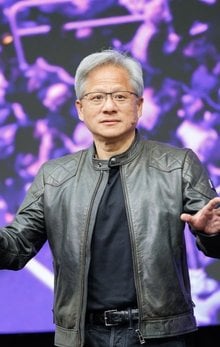
Take Jensen Huang’s Nvidia as an example. The CEO is encouraging all employees to use AI for as many tasks as possible, going as far as to call managers who limit AI usage within their teams “insane”.
Speaking the day after Nvidia reported record earnings, Jensen responded to a question about managers instructing employees to reduce their AI usage. According to Business Insider, he said: “My understanding is that Nvidia has some managers who are telling their people to use less AI.
“I want every task that is possible to be automated with AI to be automated with AI. I promise you, you will have work to do.”
By encouraging employees to up their AI usage, he said he is encouraging them to innovate in other ways. He also explained that the company is focusing on hiring: “Frankly, I think we’re probably still about 10,000 short, but the pace at which we hire should be consistent with the pace we can integrate and harmonise the new employees.”
Discussing the importance of an AI mindset, David Martin, Managing Director and Senior Partner at BCG, said in the report: “We’re seeing some executives pinpoint a few human competencies for most roles - critical thinking, creativity and self-driven learning.”
There’s something deeply valuable about a digital-first mindset, with its intolerance for doing things the old way.
Maintaining a strong workforce
To attract and keep top AI talent, BCG says that businesses must offer meaningful work and flexible conditions, not just rely on their reputation.
Leaders also need to work together across departments, invest in large-scale employee training and support ongoing learning.
This can be seen at JPMorgan, which has invested some of its US$18bn tech budget into AI development and turned its attention to a training push across the whole company.
Derek Waldron, the firm’s Chief Analytics Officer, said in an interview with McKinsey in October that the goal is to educate its workforce on how to make AI work for every single person, not a one-size-fits-all solution.
He said: “Training needs are varied, just like AI applications. The best way to approach this is segment by segment.” He added that this applies to everyone in the business.
To take it one step further, the firm launched “AI Made East”, an internal training programme for beginners focused on conducting research and processing data sets.
BCG highlights that explaining clearly how AI will change work helps employees feel less threatened and more prepared for the future.
Company portals



Executives
Derek Waldron
Chief Analytics Officer
Jensen Huang
Founder and CEO