How Are Leaders Paving the Way for Sustainability in 2026?

In 2025, the C-suite recognised sustainability as a key part of its strategy, shifting it from the sole responsibility of the Chief Sustainability Officer to a wider boardroom priority.
The UN Global Compact (UNGC) published in its 2025 CEO Study in September, finding that 88% of CEOs feel the business case for sustainability is stronger than it was five years ago.
The report highlights the importance of building resilience against climate change and recognises how executive opinion on sustainability has shifted from a moral concept to a central pillar of corporate strategy.
António Guterres, United Nations Secretary-General, says that these goals will only be better with “stronger collaboration between governments and across society and sectors”.
Sanda Ojiambo, CEO and Executive Director of the UN Global Compact, says: “CEOs are crystal clear: sustainability has moved from a moral imperative to a business fundamental.”
Deloitte Global’s 2025 C-Suite Sustainability Report shows that focusing on sustainability remains a top business priority for leaders, with 45% of the 2,100 C-suite execs surveyed saying that climate change and sustainability is a top three challenge for their company heading into 2026.
Fashion’s pledge to sustainability
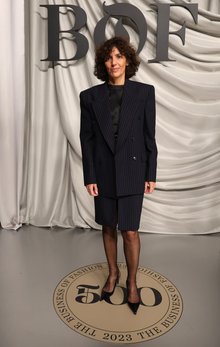
2025 was a big year for the fashion industry, with multiple acquisitions across the luxury landscape taking place, including Prada taking over Versace, and new CEOs taking to the helm to boost growth, as seen with the appointment of Francesca Bellattini at Gucci.
Many fashion houses have also proved that they are taking steps in the right direction for sustainability after the whole industry has been put under increasing pressure.
According to LVMH’s 2024 Social and Environmental Responsibility report, it says: “LVMH’s 2024 environmental performance metrics show it is on the right track to meet its LIFE 360 targets for 2026 and 2030.”
The report states that the company met its GHG reduction targets for scope 1 and 2 two years ahead of schedule, noting a 55.1% reduction.
Bernard Anault, Chairman and CEO of LVMH, said: “Our ethical principles and commitment to upholding our social, environmental and cultural responsibilities are rooted in a simple, strongly held belief that it is by working together with our employees and all our other stakeholders - public and private institutions, suppliers and partners, NGOs and indeed other companies in our sector - that we will be able to transform challenges into opportunities to drive progress across society as a whole.”
Over at Hermès, its sustainability progress outlined in its 2024 Annual Report says that its products are “responsibly manufactured, using sustainable materials, with a frugal use of materials, an approach based on craftsmanship and by applying the principles of the circular economy in its production approach as much as possible”.
Sustainability starts with the leader
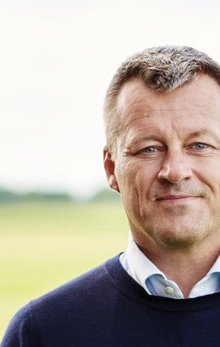
Jesper Brodin, former CEO of IKEA Ingka Group who stepped down in November, was vocal in 2025 about his commitments to sustainability, arguing that change starts from the top.
Speaking on Trellis’ ‘Two Steps Forward Podcast’ at Climate Week in October, the CEO said that all leaders need “sustainability competence”.
Jesper added: “The solution on how to resolve climate change is an economic and technical transformation. We need all leaders to collaborate because we’re in a hurry.”
Ingka Group’s results show that the CEO can walk-the-walk as well as talk-the-talk. Jesper shared that the company’s revenue has grown 24% since the adoption of the Paris Agreement in 2015.
In particular, the company’s absolute carbon - across Scope 1, 2 and 3 - is down more than 30% alongside this growth.
“There is an assumption that is very stubborn,” he said, “that sustainability would cost and come at a premium, when it’s the complete opposite.”
He’s not alone. Walmart has proven to have a chain of leaders who have seen sustainability as a business strategy.
Two-decades ago in 2005, Lee Scott, former Walmart CEO, reset the sustainability brief, announcing that Walmart would power operations with 100% renewable energy, create zero waste and sell products that sustain the planet’s resources and environment.
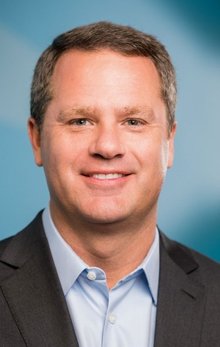
Its current CEO, Doug McMillon, said in October that the previous leader “challenged us to think differently about leadership and to use our influence and resources to make this country and the planet an even better place for everyone”.
Doug has carried on the commitments, with the firm’s latest ESG data showing 48.5% of global electricity now sourced from renewables and Scope 1 and 2 emissions 18.1% below a 2015 baseline.
The commitments across industries and from leaders should set 2026 up for a year full of climate targets being met and new goals set.
Company portals







Executives

António Guterres
Secretary General
Doug McMillon
President & CEO
Francesca Bellettini
CEO
Jesper Brodin
Chair
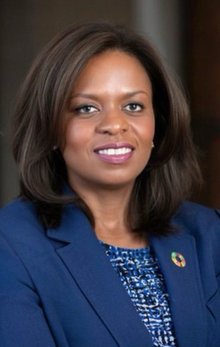
Sanda Ojiambo
Assistant Secretary - General CEO