How Is UnitedHealth Optum Insight’s CEO Leveraging AI?
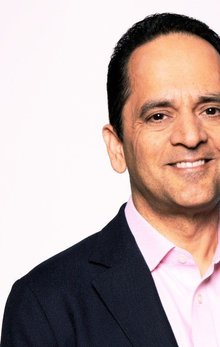
Newly appointed Optum Insights CEO Sandeep Dadlani has highlighted how he is leveraging AI and technology to make lasting changes in healthcare.
On 22 September, Sandeep was announced as the new leader of the business, challenged with bringing a new vision and path to its operations.
UnitedHealth Group (UHG), a leader in the American healthcare sector, includes two main sub-groups: United Healthcare and Optum.
Optum focuses on health services. Within the group lies Optum Insight, which delivers services centred on leveraging software, data and analytics to improve the holistic clinical ecosystem.
Sandeep has had years of experience in healthcare, digital transformation and enterprise optimisation, including working as a Chief Digital Officer at food and beverage leader Mars.
Future goals
Building on some of the key themes that have dominated his career, Sandeep has set out a series of clear tech-focused goals for the future of Optum Insight, which he also thinks will change the broader healthcare industry.
In particular, he says that leveraging the power of AI must be a top priority for both payers and providers.
Despite widespread efforts to improve healthcare delivery and outcomes, Sandeep says that “friction is high and costs are high - a recipe for chaos”, acknowledging rising levels of stress and emotional exhaustion among healthcare workers.
However, he says that AI presents a significant opportunity to ease these challenges by automating key parts of the clinical workflow, including reducing non-clinical burdens to improve efficiency.
This potential is fuelling growth in the digital health startup space, where innovation from ambient documentation technology to automation in supply chain processes are gaining traction, transforming care delivery according to the UHG.
The company says that Sandeep is actively engaging with startups and innovative firms, seeking strategic partnerships to scale impactful solutions and bring lasting value through AI-powered automation.
Upskilling as a superpower
Sandeep says it’s critical to empower the next generation of engineers and AI-enabled partners in order to adapt to this rapidly evolving healthcare landscape.
Recognising this, UHG and Optum have launched a major initiative called AI Dojo, aimed at training internal staff in advanced AI capabilities.
The goal is to create a workforce of nearly 10,000 “AI-ready builders” equipped to tackle real healthcare challenges and improve workflows.
This effort comes at a crucial time, as the demand for AI talent far exceeds supply, according to UHG.
In an update about AI Dojo on LinkedIn, Sandeep said: “More than 18,000 engineers are already enrolled in the programme, because solving healthcare’s toughest challenges requires not just great tech - but great talent too!”
The World Economic Forum has highlighted this gap, noting that not enough focus is put on upskilling: “Business leaders must think carefully about designing effective strategies to equip workers to unlock the potential of AI.”
Sandeep recognises that as technology transforms the healthcare industry, building internal talent is no longer optional, it’s essential.
Initiatives like AI Dojo are laying the groundwork for scalable, long-term impact by investing in people.
Collaboration is also crucial, says Sandeep, highlighting how an industry-wide approach is essential to driving meaningful progress in healthcare.

He emphasises that no single organisation can solve all the sector's challenges, pointing to the need for a unified team effort.
UHG says that the “rising tide lifts all boats” philosophy is essential to the leader’s vision.
“UHG and Optum are among the best and fertile learning grounds for the entire industry; the problems we are tackling are similar to what other payers and providers are facing as well”, the CEO said in a statement.
The aim is to create a feedback loop where innovation, lessons and solutions developed within one organisation can be shared and scaled across the entire healthcare ecosystem.
This ensures that progress in one area helps elevate the whole industry.
Company portals


Executives
Sandeep Dadlani
CEO of Optum Insights