
Inside GSK: Why Is CEO Luke Miels Focusing on R&D?
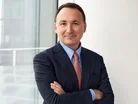
Based on its fourth-quarter and full-year 2025 results, announced on 4 February, GSK is using its first set of numbers under new CEO Luke Miels to set the tone for his leadership.
While 2025 delivered strong financial performance, Luke framed these results as a foundation.
The CEO said: “GSK delivered another strong performance in 2025, driven mainly by Speciality Medicines, with double-digital sales growth in Respiratory, Immunology & Inflammation, Oncology and HIV.
“Good R&D progress also continued, with five major product approvals achieved and several acquisitions and new partnerships completed to strengthen the pipeline further in oncology and RI&I.”
The emphasis, both in the results and outlook, is continuity of direction combined with tighter execution.
A product-led operating model
The results show that Speciality Medicines are now the primary growth engine of GSK, and products, rather than platforms or functions, sit at the heart of the organisation’s priorities.
In 2025, Speciality Medicines sales rose 17% to £13.5bn (US$18.3bn), accounting for more than 40% of total group revenue.
Growth was broad-based across RI&I, Oncology and HIV, with oncology sales increasing 43% to £2bn (US$2.71bn).
The results reinforce GSK’s positioning as a specialty-focused biopharma company, with exposure to higher-value, innovation-led therapies.
Vaccines, by contrast, delivered more modest growth of 2% to £9.2bn (US$12.4bn). Products such as Shingrix and meningitis vaccines continued to perform well, while RSV vaccine Arexvy contributed incremental revenue.
Strategically, vaccines are increasingly positioned as a stable pillar rather than the primary source of growth.
General Medicines sales declined 1%, reflecting the maturity of the portfolio.
Pipeline acceleration and selective focus
Pipeline execution is a key pillar of the strategy, with Luke positioning 2026 as a year where delivery matters.
He said: “We expect this positive momentum to continue in 2026, which will be a key year of execution and operational delivery with strong focus on commercial launches and accelerating R&D.”
Planned milestones include major launches including asthma-treating Exdensur and cancer-treating Blenrep, alongside 10 new pivotal trial starts and five late-stage readouts across oncology, inflammation and infectious disease.
Two potential approvals - bepirovirsen for chronic hepatitis B and tebipenem for complicated UTIs - are expected in the year.
Financial discipline and capital allocation
The 2025 results highlight improved financial performance and flexibility. Core operating profit increased 11%, supported by the Speciality Medicines growth in particular and higher royalty income.
Free cash flow reached £4bn (US$5.4bn), providing capacity to fund pipeline investment while maintaining shareholder returns.
GSK declared a full-year dividend of 660 for 202 and expects a 7p dividend for 2026, alongside the continuation of its £2bn (US$2.7bn) share buyback programme through the second quarter.
Despite the strong 2025 delivery, guidance for 2026 is more measured. Turnover is expected to rise by 3% to 5% at constant exchange rates, with core operating profit and EPS growth of 7% to 9%.
Speciality Medicines are expected to drive growth, while Vaccines and General Medicines are forecast to be stable or decline slightly.

Focused execution
GSK reiterated its long-term ambition of more than £40bn (US$54.2bn) in sales by 2031, but rather than raising targets, Luke emphasised delivery against existing commitments.
He said: “We are well placed to move forward in this next phase for GSK to deliver our outlooks and to create new value for patients and shareholders.”
For Luke, the first results under his leadership show a sharpened execution of GSK’s existing strategy.
The next phase will be judged on whether pipeline progress translates into consistent commercial performance.
Company portals

Executives
Luke Miels
Chief Commercial Officer