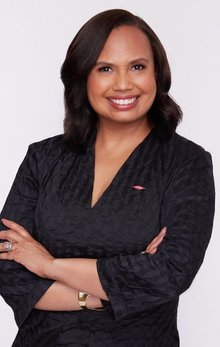
Karen Carter, Dow's First Woman CEO, Takes Over Mid-Reset
The announcement skipped the press release entirely and landed on Instagram. "Effective TODAY, Karen S. Carter succeeds Jim Fitterling as the CEO of Dow," wrote Cynt Marshall, the former Dallas Mavericks CEO, on Wednesday. "I am so proud of this sister."
The warmth was earned. Karen is the first woman, and the first Black woman, to run the 129-year-old materials science giant.
The HR chief who took the top job
Most Fortune 500 chief executives arrive through finance. Karen took the scenic route. She joined Dow in 1994 as an intern and spent more than two decades in sales and the plastics business. Then she ran human resources, first as Chief Inclusion Officer and later as CHRO through the pandemic. She later led Dow's largest segment, packaging and specialty plastics, before becoming Chief Operating Officer.
A Wichita native and Howard University graduate, she interviewed at Dow having never set foot in Midland.
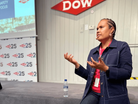
That HR chapter, she says, taught her the most. "I was the CHRO during COVID," Karen says, "making some pretty tough decisions and not necessarily having a playbook."

The board views the breadth as an asset. Richard Davis, Dow's independent Lead Director, calls her "a disciplined, highly respected leader with a deep understanding of Dow's businesses and customers".
Business chiefs are told the route to the corner office runs through the balance sheet, yet Karen reached it through people and plastics. She spent more than 25 years in the businesses before Jim asked her to build Dow's first inclusion function. "I grew up in the business," she says. "Sales was my first job. I still feel like a salesperson at heart."
Inheriting a company mid-restructure
Karen inherits a turnaround already in motion. Dow is cutting about 4,500 jobs, roughly 13% of its workforce, under a restructuring called Transform to Outperform, with notifications already under way in Midland. The programme leans on AI to simplify operations and will book up to US$1.5bn in one-time charges.
Her task is to execute Jim's cost programme while steering Dow towards higher-margin materials science. Jim becomes Executive Chair, keeping the board and the long-term strategy.
She frames the moment around control. "We're controlling what we can control," Karen says, pointing to a commitment to deliver about US$1bn in earnings uplift this year despite a fourth straight year of weak demand.
Last year Dow promised US$300m in savings and delivered US$400m. A geopolitical shock has since helped.
After the closure of the Strait of Hormuz lifted feedstock costs for rivals, Dow guided second-quarter earnings to around US$2bn, its first such quarter in years. First-quarter earnings had been just US$873m. Rivals BASF and DuPont face the same downturn, but Dow's feedstock edge in the Americas sets its recovery apart. It is also shutting high-cost European capacity, including siloxanes in Barry, while a new Gulf Coast polyethylene unit sold out on start-up.
The salesperson at the helm
Karen's early plan is deliberately unglamorous. It relies on safe operations, seamless execution of savings pledges and protecting growth projects like a new low-cost complex in Canada.
She has also vowed to keep Dow's Path2Zero climate plan on track, with carbon neutrality targeted by 2050. Customers, she says, will be a Chief Executive's priority.
The playbook she inherited from Jim is blunt. His advice, she says, was to "trust your gut" and "make a decision and move".
For a company mid-reset, in an industry four years into a downturn, that bias to action may matter more than any pedigree. The salesperson who once sold for Dow now has to sell its comeback.
Company portals

Executives
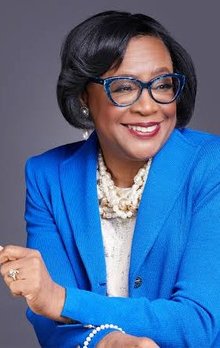
Cynt Marshall
Karen S. Carter
COO
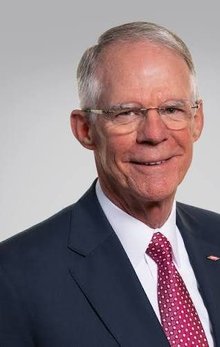
Richard Davis
Former Executive Chairman and Chief Executive Officer of U.S. Bancorp