Microsoft, BrewDog and Oracle: This Week's Top Five Stories
Microsoft's Nadella Hits Out at AI Rivals Over Distillation
Satya Nadella, Microsoft CEO, has publicly criticised, though not named, AI labs throughout the tech industry who use AI distillation to train their AI models.
The AI distillation process involves training a smaller AI model with the outputs of a larger, more powerful one.
In a post on X, Satya says that model makers complaining about the distillation process are being hypocritical over the AI training process.
He says that while "great innovation... is needed" from model providers having fair use rights to train on public data, he finds it "ironic" that the consensus among AI model makers is to impose "restrictive terms" on distillation, while still reserving the right to learn from customer usage and interaction data themselves.
“If learning flows in only one direction, economic value converges toward the owners of the learning infrastructure rather than the creators of the knowledge itself,” he adds.
Former BrewDog CEO Launches Company Takeover Bid
At the height of the business, BrewDog operated approximately 100 pubs worldwide, with a combined revenue of US$1bn.
Despite this success, prior to its acquisition by Tilray Brands in early 2026, the company financially collapsed, resulting in hundreds of job cuts across the entire business.
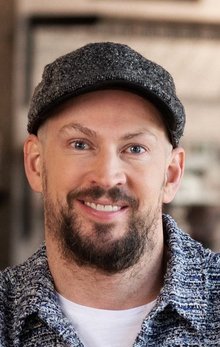
Co-Founder James Watt has since made a formal offer to buy back the business from Tilray and has offered investors in BrewDog’s “Equity for Punks” scheme, a crowdfunding initiative that offers small investors the chance to own equity, shares “for free” if his takeover bid is successful.
In a post on LinkedIn, James discussed his proposal, saying: “If we succeed, every registered punk gets their BrewDog equity back, for free.
“We'd also restore the Real Living Wage, bring back the team’s equity, and put the community back at the heart of the business. The punks and the crew built this company and BrewDog deserves to belong to them once more.”
Investors have remained sceptical about the potential over this deal and the talk of free shares, after the 20,000 people who first invested in the scheme in 2009 saw their shares lose all value following the firm’s failure.
Bottega Veneta Announces New CEO Amid Growth Strategy
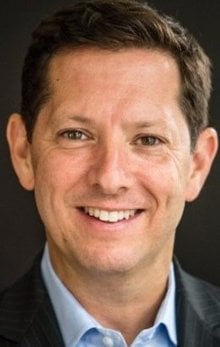
Kering has announced that Romain Spitzer will become CEO of Bottega Veneta from 1 September 2026.
Romain comes from rival luxury conglomerate LVMH, where he currently serves as CEO of the firm’s fragrance business.
He first began his career in 1995 as a junior product manager for Guerlain, accumulating more than 30 years of experience across brands like Saint Laurent, Jean Paul Gaultier and Dior.
In 2006, he joined Parfums Christian Dior as the head of its fragrance business and later held senior positions as General Manager for Spain and Regional General Manager for Europe.
A decade later, he moved to LVMH Fragrance Brands (Parfums Givenchy and Kenzo) as Chairman and CEO. There, his responsibilities were to oversee brands like Maison, Francis Kurkdjian, Acqua di Parma, Loewe Perfumes, Universelle Buly and New Ventures.
Romain will succeed previous Bottega Veneta CEO Bartolomeo Rongone, who left the company in March after six years as its lead executive.
Oracle: The AI Layoff Confession
Confession. Everything about a modern corporation is built to prevent one. The lawyers, the crisis teams, the soft passive voice of every quarterly call, a whole machine tuned so no executive ever says anything expensive in public. On 22 June, Oracle said it regardless.
Not from a stage, where words get walked back by lunch, but in a federal filing.
"The adoption and deployment of AI technologies across our operations have resulted, and may continue to result, in reductions to our workforce," the 10-K states. With that single sentence, Oracle became the first Big Tech name to put AI on the record as the reason its people lost their jobs.
The sentence has a body count. Oracle shed 21,000 people in a single year, down from 162,000 to 141,000, roughly one worker in eight.
Why Your Next Top Performer Might Not Be Human
Who manages a worker that isn’t a person? It’s not a hypothetical anymore. Agentic AI can complete multistep tasks, make decisions and act on the company’s behalf with little human involvement – and it lands in the gap between two jobs. Legal has to answer for what it does; HR has to figure out how it’s managed. Neither role was built for a worker like this.
The shift is worth being precise about. For two years, AI meant tools that helped people work faster.
The human stayed in the driver’s seat; the AI rode along. Agentic systems break that arrangement. They don’t wait for the next prompt. They act inside defined boundaries and commit the company to the outcome.
Google and Microsoft are already moving agents into live workflows rather than parking them at the prompt window.
That is not a faster tool. That is a new kind of worker, and someone has to manage it.
Company portals




Executives
James Watt
Co-Founder
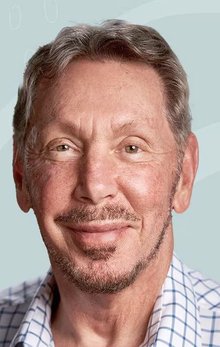
Larry Ellison
Co-Founder, Chairman and Chief Technology Officer at Oracle
Robert Feldman
Chief Legal Officer
Satya Nadella
Chairman and CEO