
Sci-Fi or a 21st Century Reality? CEOs on Space Data Centres

It sounds like something from a Sci-Fi movie: data centres in space. But for many of the biggest CEOs out there, the idea is becoming a reality.
Speaking on the “Google AI: Release Notes” on 26 November, Google CEO Sundar Pichai admits that the idea seems “crazy” but “when you truly step back and envision the amount of compute we’re going to need, it starts making sense and it’s a matter of time."
With AI advancements everywhere, data centres on earth, processing vast amounts of data used by websites, companies and governments, may not be enough to keep up with the demand, plenty of CEOs are arguing.
Sundar was referring to Google’s Project Suncatcher, which he describes as “a moonshot exploring a new frontier: equipping solar-powered satellite constellations with TPUs and free-space optical links to one day scale machine learning compute in space”.
Its scientists and engineers believe tightly packed constellations of about 80 solar-powered satellites could be arranged in orbit about 400 miles above the earth’s surface.
According to research by Google launched on 4 November, prices of space launches are falling so quickly that by the middle of the 2030s the running costs of a space-based data centre could be comparable to one on Earth.
On the podcast, the CEO didn’t reveal much more about the plans, aside from saying: “In 2027, hopefully we’ll have a TPU somewhere in space.”
But according to the Guardian, Google sounded a cautionary note: “Significant engineering challenges remain, such as thermal management, high-bandwidth ground communications and on-orbit system reliability.”

Another Elon Musk venture
“Maybe we’ll meet a Tesla Roadster,” Sundar joked, referring to when Elon Musk sent his US$100,000 red convertible Tesla Roadster into space on a SpaceX rocket in 2018.
With the roof down and a dummy at the wheel, it was spotted in space this year when astronomers mistook it for an asteroid.
The CEO of SpaceX plans to deploy data centres in space through the firm's Starship space craft, which Tesla describes as “the world’s most powerful launch vehicle ever” that acts like a “fully reusable transportation system designed to carry both crew and cargo to Earth orbit, the Moon, Mars and beyond”.
In an X post this month, also Musk-owned, he said: “Starship should be able to deliver around 300GW per year of solar-powered AI satellites to orbit, maybe 500GW. The ‘per year’ part is what makes this such a big deal.”
He’s referring to an unprecedented amount of electric capacity, with Goldman Sachs saying in February that the current global data centre capacity on Earth is 59GW.
Ex-Amazon CEO agrees
In October, Amazon’s now Executive Chair Jeff Bezos said that gigawatt-scale data centres will be built in space in the next couple of decades, adding that they will eventually outperform Earth’s ones thanks to uninterrupted solar energy and no weather disruption.
During a fireside chat with Ferrari and Stellantis with Chairman John Elkann at the Italian Tech Week in Turin, according to Reuters, Jeff said: “One of the things that’s going to happen in the next - it’s hard to know exactly when, it’s plus 10 years, and I bet it’s not more than 20 - we’re going to start building these gigawatt data centres in space.”
He added: “It has already happened with weather satellites. It has already happened with communication satellites. The next step is going to be data centres and then other kinds of manufacturing.”
Tech firms on board
Lonestar Data Holdings agrees with Jeff that space data centres will be advantageous due to unlimited solar power, but added it will also offer customers secure and reliable data processing.
The President of the off-planet data storage firm said in April, according to the BBC: “The way we see it is that by putting up the data centre in space, you’re really offering unparalleled security.”
In March, the Florida-based firm claimed it had successfully tested a tiny data centre the size of a hardback book, taking its ride to the Moon on US space exploration firm Intuitive Machines’ Athena Lunar Lander.
Nvidia AI chips have also been launched into space in November 2025, in partnership with startup Starcloud. CEO and Co-Founder of Starcloud Philip Johnston said: “In space, you get almost unlimited, low-cost renewable energy.
“The only cost on the environment will be on the launch, then there will be 10 times carbon dioxide savings over the life of the datacentre compared with powering the datacentre terrestrially.”
One thing is clear: CEOs can’t seem to get enough of the promise of space-based data centres.







Executives
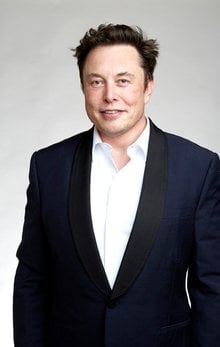
Elon Musk
Tesla CEO

Jeff Bezos
Founder and Executive Chairman at Amazon
Philip Johnston
Co-Founder & CEO
Sundar Pichai
CEO