
Siemens Announces Rebrand for Energy and Gamesa Segments

Siemens Energy is preparing to complete its separation from Siemens AG with the launch of a new corporate identity that will replace both the Siemens Energy and Siemens Gamesa brands across its global operations.
The company has announced that it will adopt the name Omterra in a phased rollout beginning later this year, marking the end of a licensing arrangement with its former parent that was always intended to be temporary following the 2020 spin-off.
The rebrand arrives as the business reports improved financial performance and positions itself for expansion, with leadership framing the move as the natural conclusion of a transition that has been expected since the company became independent.
Christian Bruch, President and CEO of Siemens Energy, says the name was chosen to reflect the company's "global footprint, its technological expertise and its commitment to contributing to reliable energy supplies worldwide." The term Omterra combines "om" meaning all and "terra" meaning land.

Building a standalone identity
The decision to retire the Siemens name comes after a period of operational challenges and market volatility that have shaped the company's strategic trajectory.
Siemens Energy has faced quality issues affecting parts of its wind turbine fleet at Siemens Gamesa whilst simultaneously benefiting from surging demand for grid infrastructure and power equipment as countries accelerate investments in electrification and transmission capacity.
The licensing agreement with Siemens AG provided the company with access to the Siemens name for a defined period following the 2020 separation.
"Since our spin-off, it has been clear that the licensed Siemens Energy brand would be available to us for a limited period," Christian explains.
"Today, our company is well positioned strategically, operationally and financially. We have earned the trust of our customers and the capital markets, improved our profitability and have ambitious growth plans for the years ahead. Against this backdrop and given that the current brand agreement is time-limited, now is the right time to begin the transition to our own independent brand."
The company has emphasised that the rebranding will not alter its strategic direction or affect day-to-day operations for customers, suppliers or employees. Omterra will be introduced gradually, with the existing Siemens Energy and Siemens Gamesa brands continuing to operate during the transition period.
Unifying two business lines
A notable element of the rebrand is the decision to bring Siemens Gamesa under the Omterra name, consolidating two businesses that have operated with separate identities since the 2020 spin-off.
Both businesses under a single identity could streamline how the group presents itself to customers as energy projects increasingly require the integration of multiple technologies rather than standalone systems.
Large-scale energy developments now often combine wind generation, gas-fired backup capacity, high-voltage grid connections and digital grid management in ways that require coordination across what were previously separate product lines.
A unified brand structure could support the company's approach to selling integrated solutions across its portfolio, potentially simplifying procurement processes for customers managing complex energy transition projects.
Christian acknowledges the role the Siemens name played in establishing the business during its early years as an independent entity.
"We are proud of what our employees have built over the past few years. Our founder's name opened doors and supported us on our path to independence," he says. "This legacy remains both an inspiration and a commitment for us as we actively help shape the energy world of tomorrow."
Growth plans and market positioning
The rebrand arrives as Siemens Energy focuses on profitability improvements and expansion opportunities in markets where demand for energy infrastructure is growing.
Robin Zimmermann, SVP of Communications and CSR at Siemens Energy, says the internal process of developing the new identity required coordination across a workforce of more than 100,000 people operating in more than 90 countries.
"Today we revealed what the team has been pouring itself into for more than a year: a new company name, a new brand and the new corporate design," he says.
Maria Ferraro, the company's CFO and Chief Inclusion and Belonging Officer, frames the rebrand as a continuation of the company's existing capabilities rather than a departure from its operational foundation.
"A century of innovation, expertise and energy has brought Siemens Energy and TeamPurple to this moment," she says. "While our legacy will always remain part of who we are, we are now beginning the next step of our journey. I could not be prouder of what we are building together and of the impact we will continue to create as one team."
The practical implications of the rebrand will become visible over the coming months as Omterra begins appearing on products, facilities and corporate communications.
The phased approach could allow the company to manage the operational complexity of updating branding across a global industrial business whilst minimising disruption to customer relationships.
The success of the rebrand will depend not only on the execution of the visual and operational transition but on whether the company can deliver on the growth ambitions that leadership says justified the timing of the move.
Company portals

Executives
Christian Bruch
President and CEO
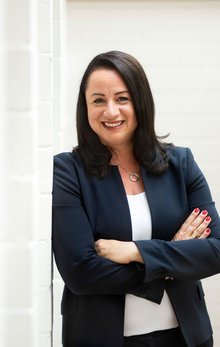
Maria Ferraro
Chief Financial Officer and Chief Inclusion & Belonging Officer
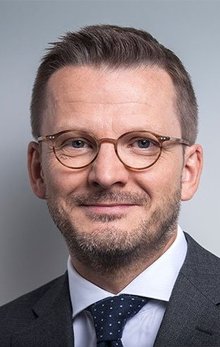
Robin Zimmermann
Senior Vice President of Communications & Corporate Social Responsibility