
Undeniable Track Records & Vision: What Really Makes a CEO?

To sustain a successful company, boards must have full faith and trust in their CEO. According to Boston Consulting Group (BCG), confidence must be held in how they will run the company, lead the workforce and work with critical stakeholders.
BCG says the leaders who are able to reach the helm in the first place have an undeniable track record and a pioneering vision.
Discussing this, Lynne Biggar, Board Member at AB InBev and other companies, says: “You can be as smart or creative as you want, but if you don’t deliver, you won’t be considered.”
This shows that it’s results that matter the most. Boards expect a CEO candidate who has consistently hit or exceeded performance targets and operated in both up and down markets.
Beyond these numbers, final stage candidates should be prepared to discuss a defining moment in their career, because as Brad Jakeman said, a Board Member at Dollar Shave Club and TOMS: “You need to have done something remarkable.”
If the CEO isn’t remarkable, the organisation won’t be.
In a world increasingly dominated by AI, CEOs need to use the tool to create this value, according to BCG. Vladimir Lukic, Global Leader of BCG’s Technology and Digital Advantage Practice, says: “AI and ERP investments will be a key part of capital allocation for CEOs.
“Enterprises will need tech-savvy leaders to make these decisions.”
How CEOs should lead people
Being in the top seat isn’t just about gaining better numbers and smoother operations, it’s about focusing on other people as part of the CEO role.
BCG says that CEO candidates need to show that they are invested in other people’s careers, helping them get hired and develop in the role, not just lead them.
Candidates should be able to describe how they inspire people, demonstrate empathy and care towards employees and keep organisational energy high.
“Reputation travels ahead of you,” Lynne adds. “You want someone others genuinely want to work for.
On average, according to BCG, 20% to 30% of senior executives turn over in a CEO’s first year, so candidates who can keep hold of this top talent are at an advantage.
Co-head of Egon Zehnder’s North American board and CEO practice, Chuck Gray, emphasises: “Boards increasingly recognise that CEO succession is not just about finding the next leader but cultivating a culture of mentorship and talent development at entry level.”
How leaders should present themselves
BCG highlights that hiring a CEO goes beyond formal meetings with Board Members. Today, this involves dinners, one-on-one meetings and social gatherings - and boards are looking at how candidates interact with others in these settings.
Amanda Sourry, Board Member of Kroger, PVH and other companies, says: “It’s not about their weakness but their self-awareness and their willingness to fill their gaps in their skill set.”
She discusses that exceptional candidates know how they come across and can describe strengths and weaknesses without getting defensive.
Board members also agree that there is often a “wow factor” for successful candidates, and they should be able to command a room without dominating it.
BCG outlines that a CEO’s gravitas should stand up under pressure, and need to be comfortable with a variety of audiences, including:
- Investors, employees, customers and board members
- Regulators, lawmakers, industry groups and community groups
- A growing galaxy of media personalities, including social media influencers and bloggers

How candidates can succeed
Underpinning all of this is the need for a pioneering vision. Brad adds that candidates should “have made decisive bets in ambiguous moments - and can articulate why and how they did it”.
Overall, CEO candidates must find ways to stay competitive while investing in AI, upskilling and talent acquisition.
For Pia Tischhauser, a Board Member at Swiss Re and Sygnum Bank, this means CEOs must make “calculated decisions based on what they know at the time and how they expect the future to evolve”.
BCG outlines that candidates should have a clear strategic vision for the company, initial thoughts on strategic priorities and a decisive 100-day plan to accelerate value creation.






Executives
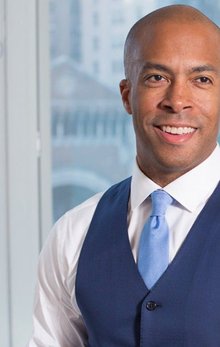
Chuck Gray
Co-Leader of the US CEO and Board Practice
Vladimir Lukic
BCG Managing Director and Senior Partner