Walmart CEOs: 20 Years Steering Sustainable Strategy

A two-decade span of CEO decisions has turned Walmart’s environmental ambitions into a long-game leadership exercise - one defined by bold targets, persistence across leadership changes and the reality that strategy must evolve when execution lags.
On 23 October 2005 at Walmart’s Arkansas headquarters, then-CEO Lee Scott reset the brief: power operations with 100% renewable energy, create zero waste and sell products that sustain the planet’s resources and environment.
Coming before the Paris Agreement and the same year the Kyoto Protocol took effect, the pledge placed sustainability at the core of corporate strategy.
At the time, speaking to the nascent state of organised sustainability, Lee said: “These goals are both ambitious and aspirational, and I'm not sure how to achieve them, at least not yet.”
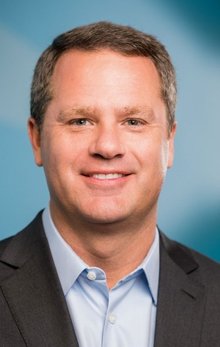
Discussing Lee’s commitments, current CEO Doug McMillon says: “He challenged us to think differently about leadership and to use our influence and resources to make this country and the planet an even better place for everyone.
“His courage and vision set Walmart on a path that continues to shape how we serve today.”
Two CEO transitions later, Walmart’s latest ESG data show 48.5% of global electricity now sourced from renewables and Scope 1 and 2 emissions 18.1% below a 2015 baseline.
Waste has been redesigned at scale, with 83.5% diverted globally.
Expectations have risen alongside the business: since 2015, inflation-adjusted global revenue has climbed 44% to US$681bn, sharpening scrutiny on whether results are keeping pace.

Product sustainability: focus vs diffusion
External assessments draw a clear distinction between operational execution and product strategy.
Jon Johnson, Professor at the University of Arkansas’s Walton College of Business, says: “I would give them an A or A-minus on their waste and energy goals. I give them a C on their product goals, and that would be a generous C.”
Jon co-founded The Sustainability Consortium in 2009 to create supply-chain-wide product metrics.
“Walmart never used that information to make procurement decisions at any scale that had the effect we were hoping it would,” he says.
Former Chief Sustainability Officer Matt Kistler is candid about prioritisation, he said: “We probably looked at every product as an opportunity to make it better.
“And there's some products where the juice was not worth the squeeze. We should have been more focused.”
Market influence beyond Walmart
Even with uneven progress, Walmart’s scale has created sector-wide shifts.
Elizabeth Sturcken, VP for Net Zero Ambition and Action at the Environmental Defense Fund, points to the retailer’s 2017 chemical footprint goal.
“You got very real ripple effects throughout the entire industry,” she said, noting that Target and Dollar General followed with similar commitments.
Advocacy has also shaped policy inside the supply base.
Ken Cook, President of the Environmental Working Group, describes how a 2014 campaign resulted in Walmart requiring suppliers to limit priority chemicals in household and personal care products.
He said: “EWG is not interested in things that don't make landscape-level changes. This is what Walmart has provided.”
Critics continue to flag low wages that can increase reliance on public assistance, weak supply chain traceability around deforestation, and packaging goals dependent on voluntary supplier actions.
The toughest challenge - Scope 3 emissions - has moved the wrong way, increasing approximately 4% over the past two years.
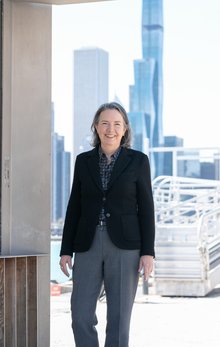
Discussing the journey, current CSO Kathleen McLaughlin says: “We're not a perfect company.
“One of the things that is pretty deep at Walmart, though, is really listening to everybody, to critics and to stakeholders.
“The easier things have been tackled. We're now in the throes of true system transformation, and that's hard work.”
Legacy and leadership lessons
Before Lee’s 2005 speech, Elizabeth says Walmart had been “a pariah” on environmental issues.
Early efforts were largely defensive, recalls Andy Ruben, the company’s first CSO, focused on moves like “stop legislation that was warranted about runoff on parking lots from fertiliser”.
Two decades on, Elizabeth sees a broader corporate imprint. “These past 20 years of work that Walmart has done on sustainability has transformed a generation of business,” she says.
“They prioritised and democratised sustainability. Walmart is not a sustainable company. They're falling behind in their operational goals.
“And they've always had a big challenge and needed to do so much more on product sustainability and their supply chain.”
Over two decades, Walmart’s environmental ambitions have become a test of long-term leadership - driven by bold goals, sustained commitment and a willingness to adapt when progress stalls.
Company portals

Executives
Doug McMillon
President & CEO
Kathleen McLaughlin
Board Chair