What Do Short CEO Tenures Mean for Businesses?

New CEOs are constantly being announced of late, and research by Boston Consulting Group (BCG) says their tenures are growing shorter all the time.
According to BCG, the average tenure for outgoing CEOs in the first half of 2025 was 6.8 years - down from 7.7 years in the same period of 2024.
The data comes from a Russell Reynolds report that tracks leadership changes at over 1,800 leading public companies worldwide - these latest findings signal the lowest tenure level since the firm began collecting data in 2018.
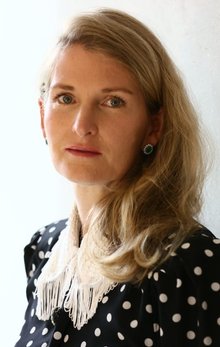
Judith Wallenstein, BCG Managing Director and Senior Partner who leads BCG’s CEO Advisory, said: “CEOs today feel enormous pressure. They have dramatically less time to show real, tangible value creation.”

What do short CEO tenures mean for businesses?
CEO tenures are shortening due to intensifying external pressures and rising internal expectations, according to BCG.
The market environment has become “increasingly unforgiving,” shaped by geopolitical uncertainty, shifting trade dynamics and rapid technological disruption - particularly from AI.
CEOs also face growing scrutiny and are held to higher standards of performance.
In 2024 alone, 42% of CEO transitions in the S&P 500 happened at companies whose total shareholder return (TSR) was in the bottom quartile.
This is reported as a significant rise from 30% in 2017, according to a report by The Conference Board, ESGAUGE, Heidrick & Struggles and Semler Brossy.
This shift is not uniform across regions. For instance, in Asia-Pacific, where large family-owned businesses are common, CEO tenures tend to be longer.
But globally, board patience has declined and the pressure often extends across the executive leadership team.

CEOs typically seek to reshape their teams, but BCG says change is slower than desired.
According to BCG 2025 research, fewer than half of executive team members typically change within the first 30 months of a new CEO’s arrival.
As Judith says: “Our research [a 2020 analysis of the tenures of 7,000 CEOs worldwide] finds that, among CEOs taking over underperforming companies in particular, those who were more aggressive about driving change in the executive ranks got better results.
Major enterprise CEOs
A recent example of a short CEO tenure is Unilever’s Hein Schumacher, who stepped down in March 2025 “by mutual agreement”, according to a statement at the time from the Board.
Hein was in the position for 18 months but The Guardian reported that the Board felt the pace of the turnaround across growth, cost cutting and restructuring wasn’t fast enough.
He was replaced by Fernando Fernandez, who was the Chief Finance Officer at the time and had extensive experience inside the company.
Another example is Laxman Narasimhan, former CEO of Starbucks, who made it 17 months in the position when he left in August 2024.
He was replaced by Chipotle Mexican Grill CEO Brian Niccol, who was tasked with turning around the coffee chain’s fortune.
According to CNBC, the company’s shares soared nearly 25% when Brian’s appointment was announced in August 2024.
BCG reports that, while large companies still select internal candidates, external appointments have been rising recently - like that of Starbucks.
The report says this signals an increased appetite for transformation and a challenging market environment.
A new era of CEO turnover
These swift exits highlight a growing trend: CEO tenures are getting shorter, and businesses must adapt.
According to BCG, this shift creates both “significant opportunities and responsibilities” for senior leaders.
Executives aspiring to the top job need to develop talent, build trust across stakeholders, and think beyond their own business unit.
For boards, succession planning can no longer be a one-off discussion - it must be ongoing and strategic.
HR leaders are critical in identifying future leaders and ensuring stability during transitions, according to the report.
Judith says: “In an era of shorter tenures, a strong partnership between the CEO and both their board and HR leadership increases the probability that the company will succeed.”
In a time of rapid change, it’s the strength of leadership teams, not just individuals, that will set companies apart.
Company portals



Executives
Brian Niccol
Chairman and Chief Executive Officer
Fernando Fernandez
Chief Executive Officer
Judith K. Wallenstein
Global Head of BCG's CEO Advisory Practice