
What Skills Does Jamie Dimon Think Are Vital in the AI Era?

It has been quite the year for AI. In many respects, that’s hardly surprising given the proliferation of the technology at the board level, across companies and everywhere in between.
But the scale and scope of AI use in 2025 have been remarkable. Over the last 12 months, the technology has changed the way companies code, the way they hire and review, and how they automate, process and succeed.
We have even seen it play the role of a handy substitute for time-strapped CEOs looking to make earnings calls more efficient (see Klarna’s Sebastian Siemiatkowski and his AI clone for more details).
One of the key questions for leaders and their teams moving into 2026 is how to stay relevant and skilled in an increasingly AI-led corporate environment.
JPMorgan Chase CEO Jamie Dimon may have the answer: work on the soft skills.
In a recent interview with Fox News’ Sunday Morning Future show, the bank’s leader discussed ways of helping workers in the age of AI.

Human skills in an AI era
Speaking on the show, Jamie said that while AI “will eliminate jobs,” he doesn’t believe it will result in significant labour force cuts within the next year, as some anticipate.
AI is transforming the job market. According to a 2025 report from Deloitte, 67% of survey respondents believe the technology could reduce the availability of entry-level roles, while also anticipating that by 2027, 50% of firms using gen AI will be piloting autonomous systems to boost productivity.
In this environment, Jamie told Fox News that soft skills will be more important than ever.
“My advice to people would be critical thinking, learn skills, learn your EQ [emotional quotient], learn how to be good in a meeting, how to communicate, how to write. You’ll have plenty of jobs,” he said.
He explained that rapid AI adoption might have a disruptive effect on some workers, impacting their roles faster than it will take to retrain them.
To mitigate this, he said, governments and businesses should act to smooth the transition as much as possible, offering suggestions including income assistance and relocation.
He said: “The next job may be a better job, but they have to learn how to do the job. You can earn quite a bit of money with skills.”
AI in banking
Several major banks have fast-tracked their AI adoption over 2025. At the start of December Wells Fargo announced the creation of a new Artificial Intelligence Lead for the company, appointing Saul Van Beurden to the position.
Chairman and CEO Charlie Scharf said: “Generative and agentic AI will reshape competitive dynamics across every industry, and we are embracing these tools as we have embraced robotic process automation and machine learning for years.
“The past year has been exciting as our world-class technology team has led us in building the technical foundation, training over 90,000 employees, deploying AI tools to over 180,000 desktops and we are now beginning to implement use cases more broadly.”
Under Jamie, JPMorgan Chase has also been upping its strategic AI ambitions.
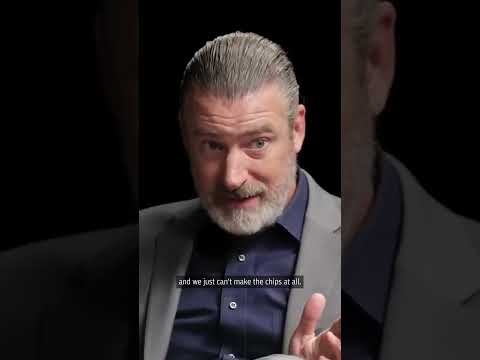
At the start of 2025, the bank acknowledged that AI is core to its US$18bn tech investment.
In an interview with McKinsey and Co. on 29 October, Chief Analytics Officer (CAO) Derek Waldron said the goal is to educate its worldwide workforce on how to make AI work for every single employee.
In November the bank said it will be giving employees the option to use AI to write annual performance reviews, according to a report in the Financial Times.
Under the scheme, it was reported that employees would use the bank’s large language model (LLM) to generate a review based on a series of prompts.
The company rolled out its LLM Suite to staff in early 2024, with the bank saying that it onboarded 200,000 users within the first eight months of its introduction.
Discussing its success in a July 2024 memo to employees, the bank said: “Think of LLM Suite as a research analyst that can offer information, solutions and advice on topic.”
Company portals

Executives
Jamie Dimon
Chairman of the Board