Why Bill Gates Warned Microsoft’s CEO Over OpenAI Investment
Microsoft’s relationship with OpenAI began in 2019 with a bold US$1bn investment, a move that, at the time, far from guaranteed results.
OpenAI was still a non-profit, just four years old, and its potential to transform the AI landscape was uncertain..
Microsoft saw the investment as a way to take a further step into the AI environment and promote its Azure cloud platform.
This first step snowballed into a partnership that has now reshaped the company’s AI ambitions.
However, even within Microsoft, the plan was far from universally accepted.
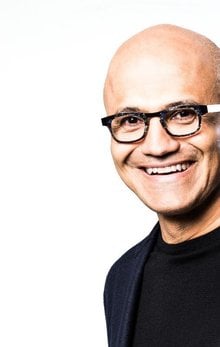
Satya Nadella, the company’s CEO, recalled the scepticism of cofounder Bill Gates in an interview with the YouTube channel TPBN.
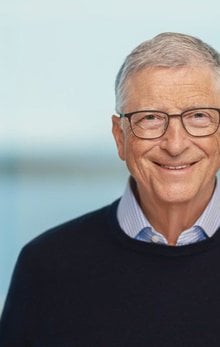
He said: “Remember this was a nonprofit, and I think Bill even said, ‘Yeah, you’re going to burn this billion dollars.
“We kind of had a little bit of high risk tolerance, and we said we want to go and give this a shot," he added.
While the investment required board approval due to its size, Satya said: “I must say it was not that hard to convince anyone that this is an important area and it’s going to be risky.”
Doubling down on a vision
That initial US$1bn laid the groundwork for a much larger commitment.
Microsoft has since invested more than US$13bn in OpenAI, and the stakes have only grown.
The company recently gained a 27% stake in OpenAI Group PBC, valued at around US$135bn, which is controlled by the nonprofit OpenAI Foundation according to the company.

This is alongside a deal for OpenAI to purchase US$250bn worth of Azure services over time.
Looking back, Satya admitted the gamble was far from certain. “In retrospect, who would have thought? I didn’t put in a billion dollars saying, ‘Oh yeah, this is going to be a hundred bagger,’” he said.
The risk has paid off. OpenAI quickly became a household name following ChatGPT’s launch in November 2022, which drew a million users within just five days.
When asked in the interview about the territory Microsoft has claimed, Satya said its AI developments have led to “multiple autonomous agents” working across different branches of AI by “building a system that really brings innovation across the ecosystem”.
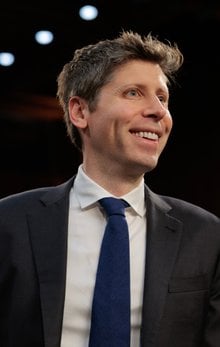
On the introduction of artificial general intelligence (AGI) - a type of AI that can perform any intellectual task that a human can do - Satya said: “Both Sam and I agree on this, it’s become a bit of a nonsensical word.
“It’s just changing and everybody defines it differently.”
He added that the first step before AGI is to “get rid of jagged problems” in existing AI and then Microsoft “will achieve more robustness for different systems”.
Recognising AI developments
Bill, who once warned about the investment, has since acknowledged AI’s rapid development.
Speaking on The Tonight Show in February he said: “There will be some things we reserve for ourselves.
“But in terms of making things and moving things and growing food, over time those will be basically solved problems.”

For Microsoft, the OpenAI partnership has been about more than financial returns. It has strengthened the company’s AI capabilities, boosted Azure’s influence, and positioned Microsoft as a leader in one of technology’s most exciting fields.
Satya’s willingness to embrace risk demonstrates how visionary leadership can turn scepticism into opportunity.
What once looked like a risky US$1bn gamble, questioned by one of the tech world’s most influential voices, has become a cornerstone of the company’s AI strategy.


Executives
Bill Gates
Chair
Sam Altman
Satya Nadella
Chairman and CEO