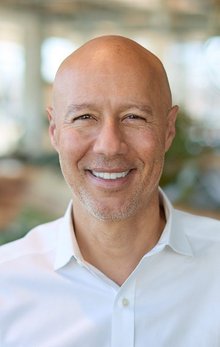
Why Does Lyft’s CEO Regularly Drive for the Company?

Lyft CEO David Risher has shared that he works as a driver for the company every six weeks, or whenever he has the time.
According to David, driving for Lyft gives him a much better understanding of how the company operates.
In a company newsletter, he shared: “Like most leaders, I need to spend most of my time at high altitude. But sometimes you’ve got to dive deep, like a falcon spotting its next meal. Driving gives me insight into riders and drivers that I’d never get sitting in my office.”
Better understanding the customer base
Speaking to Fortune, David says that one of the most valuable lessons he has learned from regularly driving for Lyft is how high-stakes some rides can be.
He says: “The most surprising thing is we are a really important part of a lot of people’s lives.”
In particular, he remembers once picking up a passenger and asking him why he takes Lyft.
According to David: “He said ‘look, if I get there at 10:01, I’m fired. I got to get there by 10 o’clock. And public transportation – as much as I’d like to use it because it’s less expensive – it’s not reliable enough'.”

These drives have led directly to new innovations within the company – including price lock, which is a subscription feature that caps fares for regular routes during one-hour windows to protect riders against surge pricing.
David says: “I picked up a woman in Sausalito, California, who told me how surge pricing impacted her daily stress levels. She’d wake up each morning not knowing if she was going to need to spend US$20 or US$40 to get to work.
“The thing is, economists love surge pricing as a way to balance supply and demand. But it was listening to this woman that helped me understand why riders hated it so much.”
Lyft’s growth under David Risher
Customer-oriented changes such as these have made a significant difference to the role the company plays in the wider market.
David first took over as CEO of Lyft from co-founders Logan Green and John Zimmer.
At the time, Uber was making almost eight times as much revenue as Lyft.
Since then, the company’s stock has risen more than 75%, with Lyft’s most recent earnings report revealing that it had exceeded analysts expectations for earnings per share by 37.5%.
Leadership involvement in day-to-day operations
David isn’t the only CEO to get closely involved in daily operations.
Brian Chesky, CEO of AirBnB, previously listed a bedroom in his home on the platform, telling CBS Mornings “if I, the founder of Airbnb can do it, then you can do it as well.”
He has also stayed in a variety of AirBnBs to better understand how people use the platform, sharing with Fortune: “Last year, I started living in AirBnB, and I stayed in like a dozen and a half over the course of six months. It became this one-year journey of becoming the ultimate guest, only living in AirBnBs from one house to the other.”
While doing this, he found that “the worst 10% of guest and host experiences were making it worse for everyone, and the whole point of our platform is to take those things off the table.”
Brian's regular stays in AirBnBs led to the company launching more than 50 new features to improve the platform – including mini-profiles for hosts and security information.


Executives
Brian Chesky
Co-founder & CEO
David Risher
Chief Executive Officer