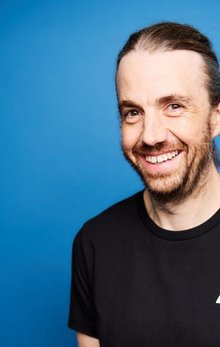
Why Perplexity's CEO Thinks AI Leads to a 'Glorious Future'

As job cuts attributed to AI continue to rise, many employees are concerned about the impact it may have on their long-term careers.
But Aravind Srinivas, CEO of Perplexity, believes this could lead to long-term opportunities.
Speaking on the All In podcast, he said that people should prioritise using AI and “start your own mini business,” as he believes this can help people experience ownership and passion in their work.
Aravind says: “Even if there is temporary job displacement to deal with, that sort of glorious future is what we should look forward to.”
Aravind founded Perplexity in 2022 alongside Denis Yarats, Johnny Ho and Andy Konwinski after working as a researcher at companies such as OpenAI, DeepMind and Google Brain.

Hiring across small businesses
This prediction can be seen in data shared by Bank of America, which finds that spending on tech services for small businesses grew 14% in February, while the number that planned to hire fell 4.4%.
The research – shared in the bank’s Small Business Checkpoint – suggests that small businesses are investing in tools that can help them boost productivity and streamline their operations.
A significant slowdown in hiring could lead to widespread unemployment, as these companies employ nearly half of all US workers.
For those looking to protect themselves from potential job losses, Aravind recommends in an interview with Matthew Berman: “Spend less time doomscrolling on Instagram; spend more time using the AIs.”
He continued: “People who really are at the frontier of using AI are going to be way more employable than people who are not. That's guaranteed to happen.”
AI and the future of work
As AI capabilities increase, more companies – big and small – are announcing widespread layoffs.
This includes tech company Atlassian, which announced in March that it was cutting 10% of its workforce because AI has changed the way it operates.
In a company memo, CEO Mike Cannon-Brookes wrote: “It would be disingenuous to pretend AI doesn't change the mix of skills we need or the number of roles required in certain areas. It does.”
When deciding how the company’s workforce would be shaped post-cuts, Mike said: “We made some structural org changes and focused on retaining Atlassians with the skills to help us thrive as an AI-first company – this included strong performers, graduates and Atlassians with transferable skills.”
Speaking with Matthew Berman, Aravind suggested this would be the way forward for many employees, saying: “Either the other people who lose jobs end up starting companies themselves and make use of AIs, or they end up learning the AIs and contribute to new companies.”

Employee to entrepreneur
Aravind discussed his own journey from employee to entrepreneur in an interview with Berkely Haas, where he said: “I’ve always looked up to entrepreneurs. I think the spirit of driving change can only be truly done as an entrepreneur.”
Founded with the goal to make search engines more traceable using AI, Perplexity has seen rapid growth since it was founded in 2022, with the company having 45 million active users by the end of 2025 – nearly double the 25 million it had at the end of 2024.
The company has received a US$20bn valuation alongside key investments from companies such as IVP, SoftBank and NVIDIA.
Company portals


Executives

Aravind Srinivas
Cofounder, President, CEO
Mike Cannon-Brookes
CEO and Co-Founder