Why Sam Altman Thinks AI Will Replace the CEO
Employee concerns around AI are rising, with a study from Acas finding that one in four workers fear they may lose their jobs due to the technology.
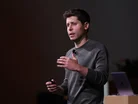
These concerns are being felt across all levels of businesses, with Sam Altman, CEO of OpenAI, saying that he believes AI will soon be able to do a better job than the CEO.
Speaking at the AI Impact Summit in New Delhi, Sam said: “AI superintelligence at some point on its development curve would be capable of doing a better job being the CEO of a major company than any executive, certainly me”.
According to Sam, this could come into play sooner rather than later: “On our current trajectory, we believe we may be only a couple of years away from early versions of true superintelligence.”
The role of leadership in the AI era
This is not the first time Sam has expressed this sentiment. In an episode of the MD MEETS podcast in October 2025, Sam discussed the potential of AI superintelligence, saying that he thinks “there will come a time when AI can be a much better CEO of OpenAI than me, and I will be nothing but enthusiastic the day that happens.
“It doesn’t scare me, it doesn’t make me sad, it’s just like I did this one thing that has been automated and I wanted it to be automated and that’s kind of what we’re doing.”
Leaders are already integrating AI into their decision-making processes at scale, with a study from Capgemini finding that CEOs are the most prolific AI experimenters across the C-suite.
According to Capgemini, this is due to a rising need for agility in the workplace, with AI tools continuously reviewing decisions against real-time data, giving leaders the ability to change course more smoothly.
Matt Blumberg, CEO of Markup AI, has gone so far as to create an AI-powered board of directors to assist him with strategic decision making.
Matt shared on LinkedIn in January that he had created a fantasy board of business leaders to review his decisions and wider performance.
He said: “Instead of looking at AI only as a tool for productivity, I wanted to see how it could help me think differently about strategy and feedback.
“My team and I created AI versions of leaders we admire, loaded them with detailed context and let them act as thought partners before real board meetings.”

AI usage in the workplace
While business leaders are integrating AI into their workflows at scale, the same cannot be said for employees.
Dayforce’s 16th Annual Pulse of Talent survey finds that AI adoption rates vary significantly – while 87% of executives say they use it on the job, only 27% of employees say the same.
The report suggests that this is due to a lack of transition support, with only 16% of workers saying that they have received training at work about AI, despite 67% of respondents saying it is somewhat or very important for them to develop AI skills.
This research also found that leaders were concerned about the impact of AI on their jobs, with 42% of senior leaders saying they would have selected a different career path if they had considered the impact of AI on job security.
Sam, however, has said he does not feel pessimistic about AI capabilities changing the way we work, telling AI Growth Summit audiences that he believes it will drive people forward.
He said: “We always find new and better things to do. I’m confident we will keep being driven to be useful to each other, to express our creativity, to gain status, to compete and much more.”