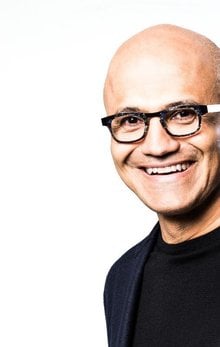
Why Satya Nadella Wants a Rethink on How We Discuss AI

At a moment when AI discourse is increasingly polarised, Microsoft CEO Satya Nadella is trying to slow down and redirect the conversation.
With much of Microsoft’s day-to-day operations now delegated to newly appointed leadership, Satya has re-emerged in 2026 as a public thinker, bringing back the early-2000s internet phenomenon of blogging as a new way to articulate how he believes AI should shape the next phase of computing.
Writing in a new personal blog, sn scratchpad, the CEO lays out his view that 2026 will be a turning point for AI, not because the technology will suddenly stabilise, but because the industry is finally being forced to confront its consequences.
He writes: “As I reflect on the past year and look toward the one ahead, there’s no question 2026 will be a pivotal year for AI.
“Yes, another one. But this moment feels different in a few notable ways.”
According to Satya, the industry is moving past a fad and spectacle and into a phase of diffusion, where AI’s success will be measured less by raw capability and more by real-world outcomes.
“We are beginning to distinguish between ‘spectacle’ and ‘substance’,” he says. “We now have a clearer sense of where the tech is headed, but also the harder and more important question of how to shape its impact on the world.”
Is AI really slop?
While the Merriam-Webster’s word of 2025 was ‘slop’, described by the dictionary as “low-quality digital content made by AI”, Satya has rejected this increasingly popular idea that AI output can be neatly categorised as impressive sophistication or meaningless ‘slop’.
He writes: “A new concept that evolves ‘bicycles for the mind’ such that we always think of AI as a scaffolding for human potential vs a substitute. What matters is not the power of any given model, but how people choose to apply it to achieve their goals.
“We need to get beyond the argument of slop vs sophistication and develop a new equilibrium in terms of our “theory of the mind” that accounts for humans being equipped with these new cognitive rolls as we relate to each other.”
That framing reflects Microsoft’s broader bet on AI agents as the next foundational layer of computing. The company envisions tools like Copilot becoming deeply embedded in how people create content, search for information and interact with software.
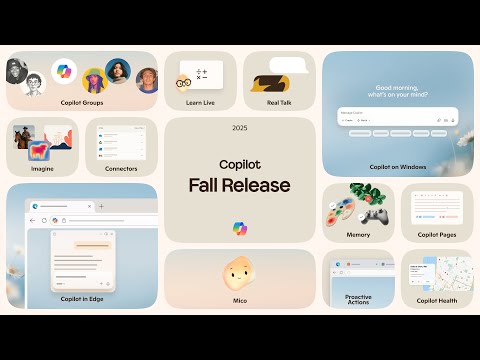
Yet the gap between that vision and current reality remains wide, with many promised features still not completed fully.
Satya acknowledges this gap, and that model power alone won’t close it, adding that he believes the next evolution of AI will come from integrated systems rather than better standalone models.
He says: “We will evolve from models to systems when it comes to deploying AI for real world impact. We have learnt a lot in terms of how to both keep riding the exponential of model capabilities, while also accounting for their “jagged” edges.
“We will evolve from models to systems when it comes to deploying AI for real world impact,” he says, describing future architectures that coordinate models and agents, manage memory and permissions and enable safer tool use.
This is the socio-technical issue we need to build consensus around.
Acknowledging risks
2025 saw many CEOs expressing caution over the risks of AI deployment on workforce and jobs, including Anothropic CEO Dario Amodei warning it could eliminate half of all entry-level white-collar jobs within five years.
Satya does not dismiss these risks, among others, and says: “We need to make deliberate choices on how we diffuse this technology in the world as a solution to the challenges of people and planet.
“For AI to have societal permission it must have real world eval impact. The choices we make about where we apply our scarce energy, compute and talent resources will matter.”
For now, Satya is signalling that Microsoft wants to be part of shaping that conversation, not accelerating it.
Company portals

Executives
Satya Nadella
Chairman and CEO