Inside the Mercedes-Benz CEO’s Strategy Letter for Europe

CEOs are increasingly becoming public figures, using their positioning to change their own companies, but to influence wider industries as a whole.
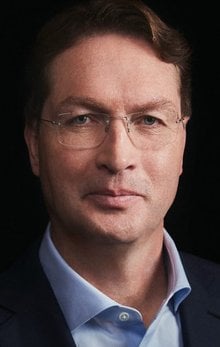
In a letter to European political decision-makers on behalf of the European Automobile Manufacturers' Association (ACEA) as its President, Mercedes-Benz CEO Ola Källenius did just that.
Sharing the letter on LinkedIn, Ola said: "Europe's future and the strength of our industry go hand in hand. As the global competition accelerates, we must seize the opportunity to write the next successful chapter through bold decisions and a shared belief in Europe's leadership."
The CEO says he laid out set actions that the European automotive industry views as essential "to advance Europe's industrial future", in an attempt to secure the future of the industry and Mercedes-Benz.

An invention that has changed the world
Addressed to EU leaders, the President of the European Commission and the President of the European Parliament, the CEO described the invention of the automobile as one that "went on to change the world" 140 years ago.
"The car did not replace the horse-drawn carriage because it was mandated by the state," Ola says, "but because it was simply the better solution - one that profoundly improved the quality of human life."
He says that he remains committed to the transition to electrification and will continue to invest in Europe, but added that European manufacturers can win with "product excellence alone".
"Our success story will depend on pragmatic regulation, open markets, new infrastructure and market demand, and a robust industrial strategy that supports manufacturing in Europe," Ola writes.
The letter continues to outline three objectives that the CEO says will guarantee the automobile industry's strength "and, by extension, for Europe's success".
Strengthening resilience for the future of the automobile industry
Ola says that the first objective aligns with the EU's 2026 ambition for "strengthening resilience and managing critical dependencies where they create vulnerability".
He says that the EU still remains one of the most attractive trade partners "despite doomsday predictions about death of the free trade era", and he hopes the signing of the free trade agreement with India will increase trade negotiations with other regions.
"We also share the goal of generating more value in Europe and preventing deindustrialisation," the CEO says. "Any policy to strengthen production and investments in Europe should rely primarily on incentives and sit within a broader re-industrialisation push: faster and simpler permitting, lower industrial energy costs, higher labour productivity, predictable support for upfront investment and ongoing operating costs - particularly to scale EV battery manufacturing in Europe."

Low carbon solutions for customers and the economy
The second objective outlined in Ola's letter is pragmatic decarbonisation. He says: "only an industry that stays competitive globally - and retains its export edge - can mobilise the investment needed to decarbonise at scale".
He says the pathways for decarbonisation for cars, vans and trucks should have ambitious targets, but the framework also needs anchor Europe's economic security.
"But the immediate test for cars and vans will happen by 2030," the CEO writes. "To meet these targets, the battery-electric market share would need to rise dramatically by the end of the decade - and that will not happen without consistent demand incentives across all Member States, electricity prices significantly more attractive than that of fossil fuels and a faster rollout of charging infrastructure."
Consumers must feel enticed rather than forced to switch.
Reigniting vehicle production
The final objective Ola lays out is that the decline in vehicle production in Europe must be reversed. He says that European output "remains significantly below pre-COVID levels", but it is crucial to increase numbers for jobs, investment and keeping "critical skills" in the continent.
He outlines that there must be a rebalance of regulation with incentive, because rules alone aren't creating demand fast enough, and suggests that regulations should be aligned with vehicle development cycles so companies can plan around them.
"For this year, the Commission titled its annual work programme 'Europe's Independence Moment' underlining a push for self-reliance in an increasingly unforgiving world. We agree," Ola says.
He finishes the letter emphasising that "every single member of our association [ACEA] stands ready to work with policymakers and partners across value chain to invest, innovate and secure Europe's industrial future - for the next 140 years."