What Does Elon Musk's $1bn Investment Mean For Tesla?
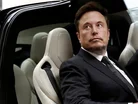
Tesla CEO Elon Musk’s US$1bn investment into the company’s stock boosted the firm’s share price to 85% above its April low and erased its 2025 losses, according to Bloomberg.
The investment, announced by Tesla on 15 September, came just days after the company proposed a US$1tn compensation package for Musk that, if approved, has the potential to be the largest corporate pay award in history.
In March, CNBN reported that shares of the EV maker dropped 36% in the first three months of 2025.
Musk’s short-lived alliance with Donald Trump, as well as his use of X to share his political views, were claimed by some analysts to be the reason behind the financial results of the vehicle manufacturer.
JP Morgan analyst Ryan Brinkman told Forbes at the time: “We struggle to think of anything analogous in the history of the automotive industry, in which a brand has lost so much value so quickly.”
The compensation package
The huge compensation offer on the table for Musk, which is close to Tesla’s current market valuation, follows the company’s recent ‘Master Plan IV’ announcement, outlining a future of reimagined labour through humanoid robots, transforming mobility and delivering more sustainable energy.
Musk must meet a list of ambitious targets over the next decade in order to receive the payout, including boosting the company’s valuation by around US$7.5bn.
All compensation will be related to performance and awarded as he meets goal milestones, the first is to reach a market capitalisation of US$2tn; the following nine require an extra $500bn while the last two each require an additional US$1tn.
But if Musk fails to double Tesla’s valuation over the next decade, the billionaire will receive no pay reward.
Musk’s leadership
Tesla’s electric vehicle sales have reduced of late, dropping nearly 60% in the UK in July year-on-year, with Chinese rival BYD climbing.
In a post on X at the start of September, Musk posted: “~80% of Tesla’s value will be Optimus”, highlighting the future potential of Tesla’s humanoid robots.
This hints at the automaker’s growing shift in focus from electric vehicles to a future defined by autonomous systems and humanoid robots, as highlighted in Tesla’s ‘Master Plan IV’.
Master Plan IV outlines the products and services that will continue to grow in line with Tesla's focus towards sustainable developments that solve real-world problems.
This includes solar energy generation and large-scale battery storage, which Tesla says will increase the availability and reliability of clean electricity in communities.

The company says in the report that its Optimus robots are changing not only the perception of labour but its availability and capacity too.
Also in the plan are autonomous vehicles which Tesla says will dramatically improve the affordability, availability and safety of transportation while reducing pollution.
Amongst many of these projects in Musk's remit, Tesla has opened the Robotaxi app to the public, inching closer to its global widespread autonomous service.
Tesla originally launched its Robotaxi in June, aimed at investors and influencers in Austin.
The future of Tesla and Musk
The Wall Street Journal reported in May that the company was looking to replace Musk due to his work and activities outside of the company's operations, but these claims were labelled “absolutely false” by Tesla.
Tesla’s pay offer to Musk was revealed in a recent filing to the US Securities and Exchange Commission on 5 September, where company board members Robyn Denholm and Kathleen Wilson-Thompson said: “Growth that may seem impossible today can be unlocked with new ideas, better technology and greater innovation.”
This supports the bold vision set out in the master plan, and hints and a continued evolution of the company's focus from just EV vehicles towards a future built on AI, robotics and driving sustainability.
Tesla outlines in the Master Plan IV: “We are on the cusp of a revolutionary period primed for unprecedented growth.”