BizClik Partners with Amazon's Carbon Credit Service
Finance chiefs seeking new approaches to climate investment may find opportunity in carbon credit markets.
The sector could offer qualified businesses a route to manage residual emissions while supporting climate projects.
Carbon credits allow companies to offset emissions through verified initiatives that remove carbon dioxide or prevent its release.
The voluntary market has faced scrutiny over transparency and quality, prompting organisations to seek partners with established vetting processes.
Amazon has opened its carbon credit service to qualified UK companies through its Sustainability Exchange platform.
The offering provides access to credits vetted through the same standards Amazon applies to its own climate commitments.
Addressing carbon market scepticism
The voluntary carbon market has encountered questions about its effectiveness as a climate tool.
Companies evaluating carbon credit investments now prioritise transparency and verification standards when selecting providers.
Kara Hurst, Chief Sustainability Officer at Amazon, addresses these concerns directly.
"The voluntary carbon market has been challenged with issues of transparency, credibility and the availability of high-quality carbon credits, which has led to scepticism about nature and technological carbon removal as an effective tool to combat climate change," she says.
"However, the science is clear: We must halt and reverse deforestation and restore millions of miles of forests to slow the worst effects of climate change.
"We're using our size and high vetting standards to help promote additional investments in nature, and we are excited to share this new opportunity with companies who are also committed to the difficult work of decarbonising their operations."
The service handles sourcing, procurement, retirement and reporting for participating companies.
This operational model could reduce the resource burden on finance teams evaluating carbon market entry.
Strategic integration for media businesses
BizClik Media has integrated carbon credits into its sustainability roadmap, illustrating how service companies approach emissions they cannot yet eliminate operationally.
The global media and events company operates across multiple markets. Its portfolio includes Sustainability Magazine and Sustainability LIVE events, platforms focused on climate innovation and sustainable business dialogue.
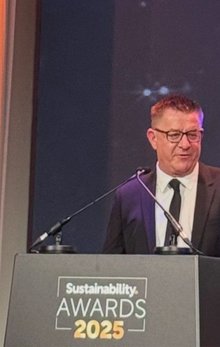
Glen White, CEO of BizClik, frames the strategy as an extension of existing commitments.
"Our 2026 sustainability strategy represents our renewed commitment to building a resilient, inclusive and low-carbon future that thrives on innovation and collaboration," Glen says.
Glen emphasises alignment with client expectations.
"What excites me most is how closely this aligns with our clients' own ambitions. Together, we can turn sustainability commitments into real, lasting impact-creating opportunities for collaboration, innovation and long-term value for everyone involved."
Stacy Green, Chief People and Sustainability Officer, outlined how sustainability connects to business strategy.
"At BizClik Media, sustainability is embedded into our long-term business strategy and the global platforms we build across media, events and executive communities," Stacy says.
Stacy positions carbon credits as part of broader operational responsibility.
"As a growing international media and events company operating across multiple global markets, we recognise the importance of continuing to reduce operational emissions while also supporting credible climate solutions as part of our wider sustainability journey.
"We believe businesses should act now, not wait, and continue taking practical steps towards long-term environmental responsibility."
BizClik evaluated multiple carbon credit options before selecting Amazon's service. The decision criteria included quality assurance, transparency and alignment with existing sustainability commitments.
"BizClik is participating in Amazon's carbon credit service on the Sustainability Exchange, which has just expanded to qualified companies in the UK," Stacy says.
"As part of our wider sustainability roadmap, we were looking for a solution that offered confidence in quality, transparency and alignment with our broader sustainability commitments, alongside access to a growing range of credit types across multiple climate solutions."
The connection to Amazon's own carbon strategy influenced the selection.
Stacy adds: "With this service, we get credits sourced with the same industry-leading approach that Amazon uses for its own carbon neutralisation and insetting strategies."
BizClik will host Sustainability LIVE: The Leadership Summit at London Climate Action Week on 25 June 2026 at Code Node.

Operational simplification for finance teams
Amazon's service design addresses complexity that can deter companies from entering voluntary carbon markets. Sourcing quality credits requires expertise in project verification, risk evaluation and impact assessment.
The platform manages operational aspects including procurement processes and retirement administration. It also provides reporting infrastructure for companies tracking climate-related financial disclosures.
Credits available through the service undergo science-based vetting matching Amazon's own climate commitment standards. This standardisation could appeal to finance teams seeking defensible carbon investments.
The offering includes both carbon neutralisation and insetting credits. This range allows organisations to structure carbon strategies around specific operational requirements or supply chain priorities.
Available credit categories include five distinct project types:
- Superpollutant abatement focuses on destroying legacy refrigerants and reducing methane from agricultural processes including rice cultivation
- Reducing deforestation through jurisdictional REDD+ programmes that protect forests and support dependent communities
- Restoring forests via reforestation and ecosystem restoration initiatives with carbon sequestration potential
- Technological carbon removal including direct air capture that removes carbon dioxide and stores it permanently
- Lower-carbon fuels through insetting credits supporting renewable fuel production to reduce supply chain emissions
The project range spans immediate emissions reduction and longer-term technological solutions. This structure allows companies to balance short-term climate commitments with investments in emerging removal technologies.
Projects address different aspects of the carbon cycle, from preventing forest loss to deploying direct air capture infrastructure.
Finance teams can select project types based on verification standards, impact measurement capabilities or alignment with corporate sustainability reporting requirements.
The insetting option could appeal to companies seeking to address supply chain emissions specifically.
These credits support lower-carbon alternatives within existing operational frameworks rather than offsetting emissions through unrelated projects.


Executives
Glen White
Chief Executive Officer
Kara H. Hurst
Vice President, CSO, Worldwide Sustainability
Stacy Green
Chief People & Sustainability Officer