Can Leadership Align Supply Chains in Kimberly-Clark Merger?

When Kimberly-Clark put forward its US$48.7 billion cash-and-stock offer to acquire Kenvue, the move immediately raised the stakes in the global consumer healthcare market.
Yet beyond the impressive price tag and boardroom unanimity lies an even greater test of leadership: integrating two vast supply chains and navigating the layered risks that accompany them.
At US$3.50 per share in cash and 0.14625 Kimberly-Clark shares for each Kenvue share held, valuing the Tylenol maker’s equity at roughly US$40.3 billion, the deal signals an unambiguous commitment to scale. But as any CEO knows, scale alone is not strategy.
The real measure of leadership lies in how effectively both companies can align their procurement networks, logistics systems and compliance frameworks into a unified, efficient model capable of serving nearly half the world’s population.
Kimberly-Clark’s leadership team has set an ambitious target: US$2.1 billion in annual cost synergies within three years.
These savings hinge on streamlined manufacturing and logistics, smarter supplier alignment and consolidation of production facilities. The numbers are bold, but the execution risk is real.

Managing complexity with clarity
Integration of two complex organisations demands vision beyond spreadsheets. It will test leaders’ ability to distill clarity from complexity - to communicate direction, mitigate disruption, and hold teams accountable through turbulent change.
“Kimberly-Clark will take on potential litigation risk for the Tylenol brand... this is hard to quantify,” says TD Cowen analyst Robert Moskow.
That exposure threads directly into the supply chain challenge. Over-the-counter medicines like Tylenol face rigorous traceability and quality control requirements.
Leaders must now ensure their compliance and quality teams can operate under a single governance system that meets both consumer and regulatory expectations.
Aligning two compliance cultures will require a sophisticated leadership mindset that balances caution with innovation.
Misalignment in labelling, sourcing or packaging could trigger both legal and reputational fallout, fatal in a category built on consumer trust.
Crisis leadership and reputation resilience
Kenvue’s reputation has already been tested. Tylenol sales fell 11% in late 2025 after President Donald Trump linked its use during pregnancy to autism.
While no definitive evidence supports the claim, US Health and Human Services Secretary Robert F. Kennedy Jr. described the data as “very suggestive".
The fallout dented consumer sentiment and forced recalibration of stock and production planning.
In this context, the acquisition becomes as much about leadership as logistics. Jay Woods, Chief Market Strategist at Freedom Capital Markets, called the move “buying damaged goods".
He pointed to ongoing litigation tied to Tylenol and talc-based baby powder as evidence that Kimberly-Clark’s leaders must proactively design resilience into their new supply chain, accounting for potential product de-listings, reformulations or withdrawals.
Driving innovation amid integration
Amid risk and complexity, there is also opportunity for renewal. Both companies are doubling down on R&D to blend Kenvue’s science-backed innovation with Kimberly-Clark’s consumer insight.
Mike Hsu, Chairman and CEO of Kimberly-Clark, says: “We are excited to bring together two iconic companies to create a global health and wellness leader. With a shared commitment to developing science and technology to provide extraordinary care, we will serve billions of consumers across every stage of life.”
From an operations standpoint, this innovation push will challenge traditional production and regulatory processes. Leaders must empower teams to move faster - to test new formulations, adapt packaging and update documentation, all without compromising compliance. It’s a balancing act few organisations get right.
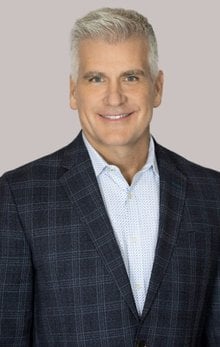
Kenvue’s CEO Kirk Perry frames this as an acceleration of leadership capacity: “Together, our combined strengths, expanded capabilities and resources, and broader reach will empower us to innovate even faster and strengthen our category leadership.”
Vision beyond the deal
If the integration succeeds, the combined company could generate US$32 billion in annual revenue. Kimberly-Clark intends to fund the deal through cash, debt and proceeds from asset sales - including a 51% stake in its International Family Care and Professional business.
It’s a signal of confidence but also of discipline: every dollar must deliver measurable impact.
For Larry Merlo, Chair of the Board at Kenvue, the rationale is clear: “Bringing together Kenvue and Kimberly-Clark creates a uniquely positioned global leader in consumer health with a broader range of new growth opportunities ahead. It is the best path forward for our shareholders and all other stakeholders.”
Behind these headline ambitions, though, are the people who must operationalise them. Their success will depend on how leadership at every level applies clarity, empathy and decisiveness to one of the biggest consumer health integrations in history.
If executed well, it could redefine not only Kimberly-Clark’s future, but the very playbook for leadership amid transformation.
Company portals

Executives
Kirk Perry
Chief Executive Officer and Director at Kenvue
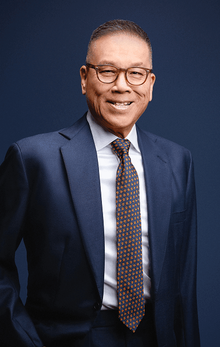
Mike Hsu
CEO