How Rolex Blends Quality, Craftsmanship and Sustainability

Luxury watchmaker Rolex, which reported global sales of US$10.58bn in 2024, has focused on integrating sustainability into its overarching corporate strategy.
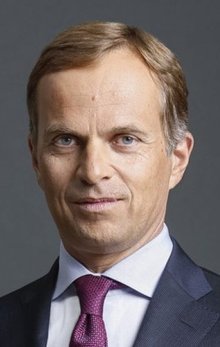
According to company CEO Jean-Frédéric Dufour, Rolex's approach is deeply rooted in its philosophy of enduring quality, craftsmanship and passion for creating exceptional products.
“Since its creation, Rolex has been driven by a passion: to design and manufacture watches that stand the test of time,” says Jean-Frédéric.
“The quest for quality and excellence – the foundation of our philosophy – has always required us to operate in a responsible and sustainable way.”
The company is well known for its innovation and creativity – it created the first waterproof wristwatch among other designs, and still produces nearly all its components in-house.
Recognising its focus on quality and craftsmanship, the company was recently named 36th in Sustainability Magazine’s Top 250 World’s Most Sustainable Companies for 2025.
The reward reflects Rolex's efforts to align its long-standing focus on quality with measurable environmental objectives.

Science-based emission targets
Rolex has established clear targets to reduce its greenhouse gas emissions that have been verified through the Science Based Targets initiative (SBTi).
In particular, the company aims for a 42% reduction in absolute Scope 1 and 2 emissions and a 25% reduction in Scope 3 emissions by 2030, using its 2021 figures as a baseline.
To meet these goals, Rolex is implementing several operational changes.
These include reducing its reliance on mined gold, increasing its use of renewable energy sources and investing in more efficient machinery at its production facilities.
Rolex is also optimising its transport mobility and packaging. According to the company, its direct emissions primarily originate from natural gas consumption at its production sites in Switzerland.
The perpetual planet initiative
In 2019 Rolex launched its Perpetual Planet Initiative to formalise its commitment to environmental protection and exploration.
This programme extends beyond the company’s own manufacturing footprint to support wider conservation efforts concerning the planet's poles, oceans, mountains and forests.
The initiative follows a three-part strategy:
- Explore: to better understand the planet and the changes it is undergoing
- Act: to combat the dangers threatening nature ecosystems the climate and communities
- Inspire: to empower the next generations of explorers scientists and environmentalists
Through this initiative Rolex forms partnerships and provides financial support to organisations.
For instance, the company has collaborated with the National Geographic Society to fund a series of scientific studies in the Amazon river basin.

Raw materials and circularity
As a globally renowned brand with customers across countries, a large portion of Rolex's emissions profile is linked to its supply chain.
The sourcing of precious metals such as gold platinum palladium and silver accounted for 71% of its total carbon footprint in 2024. In response to this, Rolex has focused on enhancing the traceability of its raw materials throughout their life cycles to improve transparency and manage risks.
The company uses a combination of mined gold from industrial and artisanal sources and recycled gold recovered from its own production waste, as well as from the broader watchmaking and electronics sectors.
This focus on circularity also extends to its product packaging.
Rolex has developed a new presentation box that reduces the proportion of petroleum-based plastic from 92% to 6%. This change results in a yearly reduction of 500 tonnes of plastic.
The redesigned box, which is made mostly of wood cardboard and moulded cellulose, has a 50% lower greenhouse gas emissions footprint over its life cycle.
“Sustainability, which has always guided our processes and actions, is now gaining visibility and mobilising the whole company,” Jean-Frédéric says.
“We believe that quality and the constant pursuit of excellence are the best guarantees that we can give in terms of sustainability, because they are what compels us to constantly improve our social and environmental impact.”
The company uses a combination of mined gold from industrial and artisanal sources and recycled gold recovered from its own production waste, as well as from the broader watchmaking and electronics sectors.
This focus on circularity also extends to its product packaging.
Rolex has developed a new presentation box that reduces the proportion of petroleum-based plastic from 92% to 6%. This change results in a yearly reduction of 500 tonnes of plastic.
The redesigned box, which is made mostly of wood cardboard and moulded cellulose, has a 50% lower greenhouse gas emissions footprint over its life cycle.
“Sustainability, which has always guided our processes and actions, is now gaining visibility and mobilising the whole company,” Jean-Frédéric says.
“We believe that quality and the constant pursuit of excellence are the best guarantees that we can give in terms of sustainability, because they are what compels us to constantly improve our social and environmental impact.”