
E.ON Announces Acquisition of UK Energy Supplier OVO

E.ON is acquiring OVO Energy in a deal that could reshape the UK retail energy market and create a combined customer base of 9.6 million accounts. The move positions the merged entity to challenge Octopus Energy for market leadership.
According to E.ON's announcement on 11 May, the transaction combines E.ON's 5.6 million customers with OVO's four million account base. Financial terms have not been disclosed, though earlier reports valued OVO at as much as £600m (US$798m).
The acquisition comes as the UK's energy sector undergoes its latest consolidation phase. For decades, six major providers dominated the market, but mergers and new entrants have reshaped the competitive landscape in ways that mirror the shifts seen in other mature industries.
E.ON acquired npower in 2019, while OVO and Octopus Energy grew their market positions through a combination of organic growth and strategic purchases. OVO bought SSE's retail arm in 2020.

Strategic rationale for expansion
Chris Norbury, the Chief Executive Officer of E.ON UK, frames the acquisition as a response to structural market changes rather than a pure scale play. The company sees future competition centred on flexibility services, home electrification and digital control of household energy demand.
"For decades the UK energy system focused too much on those upstream," he says. "Now is our opportunity to change that. Solar, batteries, EVs and a retailer built to orchestrate. That is what this deal is about: customers in control and new energy that works for everyone."
According to E.ON, the acquisition will strengthen its ability to expand time-of-use tariffs, smart charging services and integrated home energy solutions. The company argues that combining larger customer numbers with digital platforms would allow households to become more active participants in balancing the electricity system.
Chris adds that the rationale extends beyond market dominance. "It is not about scale for its own sake," he says. "It is about building a retailer with the capability, the technology and the customer base to make new energy work for everyone."
OVO's financial pressures
The proposed takeover follows a turbulent period for OVO. Stephen Fitzpatrick founded the supplier in 2009, building its reputation as a challenger brand attacking the traditional market leaders.
That positioning weakened during the energy crisis of 2022 following Russia's invasion of Ukraine. OVO faced criticism over its customer communications as energy bills soared and came under financial pressure as Ofgem tightened its resilience requirements for energy firms.
The company spent the past year attempting to reassure regulators and investors over its balance sheet while restructuring operations. Late last year, reports suggested OVO was looking for around £300m (US$405m) in fresh investment.
OVO also considered asset sales linked to its Kaluza software platform, which Stephen now heads up. The company announced plans to cut around 200 jobs as part of efforts to meet tougher regulatory capital standards.
Market consolidation continues
Tom Goswell, the Energy Supply Lead at Cornwall Insight, says that larger suppliers could bring OVO some "stability, resilience and the ability to invest," though he also suggests that mergers and acquisitions also have the potential to reduce consumer choice across the UK.
The UK energy market has undergone rapid consolidation following the collapse of dozens of smaller suppliers during the energy crisis. A successful takeover would further concentrate market share among a smaller group of major providers with the financial capacity to absorb regulatory costs and invest in low-carbon technology.
Industry analysts argue that suppliers now require deeper balance sheets and stronger digital infrastructure to survive in an environment shaped by tighter regulation and volatile wholesale markets. This creates barriers to entry that favour established players with access to capital.
The deal must pass regulatory scrutiny before completion. E.ON expects approval in the second half of 2026, until which point both companies will continue operating independently.
Consumer groups have moved to reassure households worried about disruption. Emily Seymour, the Energy & Sustainability Editor at Which?, says that OVO customers should not panic.
"E.ON have assured customers that existing tariffs will be honoured in full and service will continue unchanged. You don't need to do anything and you're still able to switch supplier if you wish."
Questions are likely to emerge around competition in the retail sector. The concentration of market share among fewer providers with the financial resources to meet regulatory requirements and invest in new technology could limit consumer choice over time.
E.ON has spoken openly about its intentions for the transaction. The company confirmed it will continue licensing Kaluza for OVO's customer base after completion and will examine whether the platform can be deployed more widely across E.ON's international operations.
Kaluza is regarded as a valuable component of this deal. As suppliers compete to manage electric vehicle charging, heat pumps, batteries and flexible demand at scale, software platforms capable of coordinating millions of connected devices are becoming core infrastructure.
That detail may prove as strategically important as the customer numbers themselves. The ability to orchestrate distributed energy resources at household level could determine which companies capture value in the next phase of market evolution.
Ramona Vlasiu, the Chief Operating Officer at E.ON, says: "Today is an exciting step that reflects E.ON's continued commitment to the UK market and our ambition to build a retailer with the scale, capability and technology to play a leading role in the energy transition."
The proposed takeover signals another step towards a business model where suppliers manage not just energy supply but entire home energy systems. For E.ON, the deal offers a path to grow its customer base while acquiring the digital capabilities needed to compete in an increasingly technology-driven market.
Company portals


Executives
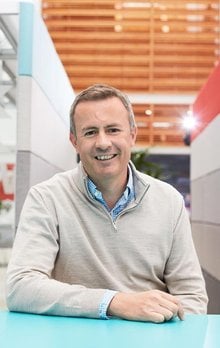
Chris Norbury
Chief Executive Officer at E.ON UK

Ramona Vlasiu
COO

Stephen Fitzpatrick
Co-Founder