Goldman Sachs CEO says Firms Value Skill over Intelligence

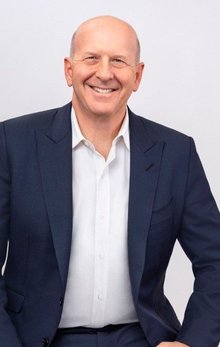
Goldman Sachs CEO David Solomon says he is not seeking the most intelligent minds when sourcing talent. Instead he insists sometimes employees that are “smart enough” are better suited for career growth.
Discussing his hiring philosophy, David says employees need only be "smart enough". He adds that the "smartest person in the world without a whole package of other things [is] not going to navigate Goldman Sachs well" and will be unlikely to find success at the firm in the long term.
David looks for several key areas when hiring new employees instead of focusing on educational ability.
He says the most attractive candidates are in touch with “human elements”, such as the ability to connect, be resilient and be determined.
Additionally, David adds that employees must strive for excellence and above all else, should attend an interview with a proven track record.

Business experience vs intelligence
David goes on to emphasise the importance of experience, adding that it is a “hugely underrated” skill and a “big differentiator for the firm”.
He adds that success is not possible without it and that book smarts over real-life expertise will not be enough for someone to land a job at the firm.
“You can't teach experience,” David explains. “Experience matters in these big organisations and when it matters it doesn't matter when things are going well. It matters when the bumps come. You've got to make difficult judgments.”
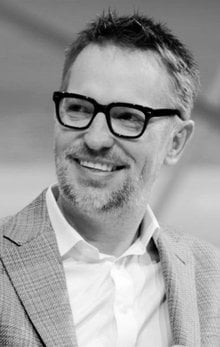
David is not alone in this philosophy. Lead executives like Ryan Roslansky, former CEO of LinkedIn, have previously cautioned against firms hiring candidates based solely on their educational background, hiring teams instead will be focusing on employees who meet the criteria of their AI-ready talent strategy.
Speaking during a Microsoft Fireside Chat in October 2025, Ryan said: “I think the mindset shift is probably the most exciting thing because my guess is that the future of work belongs not anymore to the people that have the fanciest degrees or went to the best colleges.”
CEO success despite education hurdles
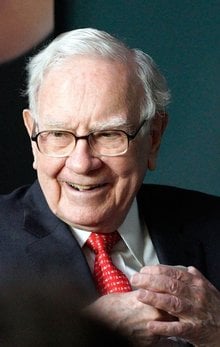
Berkshire Hathaway’s Warren Buffett holds a similar outlook to David, who has previously voiced his disinterest in evidence of college education during the talent sourcing process.
When discussing Berkshire Hathaway's 2005 acquisition of Forest River, he pointed to the company's CEO, Pete Liegl. Warren said: "No competitor came close to his performance," despite the executive's lack of a diploma from a prestigious university.
He also pointed to major CEOs like Bill Gates, who dropped out of Harvard University in 1975 and went on to achieve monumental success.
“I never look at where a candidate has gone to school. Never!” Warren told shareholders in 2025 in the company’s annual letter.
“Of course, there are great managers who attended the most famous schools. But there are plenty [...] who may have benefited by attending a less prestigious institution or even not bothering to finish school,” he added.
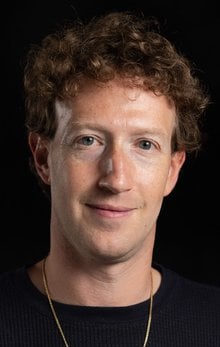
Elite college degrees, once considered the benchmark of intelligence by many across all industries, have become less important for career trajectories, according to business leaders. Meta’s Mark Zuckerberg said that colleges are not providing graduates with enough skills to kickstart their careers.
“There's going to have to be a reckoning,” Mark said in April on the This Past Weekend podcast.
He added: “People are going to have to figure out whether that makes sense. It's sort of been this taboo thing to say, 'Maybe not everyone needs to go to college,' and because there's a lot of jobs that don't require that.
“People are probably coming around to that opinion a little more now than maybe like 10 years ago.”
Company portals




Executives
David Solomon
Chairman & Chief Executive Officer
Mark Zuckerberg
CEO
Ryan Roslansky
Executive Vice President
Warren Buffet
Former CEO