Why David Solomon is Optimistic About Global Finance

In a recent letter to shareholders, Goldman Sachs CEO David Solomon has stated despite financial concerns brought on by geopolitics, he remains optimistic about the opportunity to scale business through areas like mergers and acquisitions.
On 13 April, the company reported strong first-quarter earnings, citing continued client interest in deal-making despite industry concerns over conflict in the Middle East.
Goldman Sachs reported net revenues of US$17.23bn and net earnings of US$5.63bn in its first quarter according to a 2026 company report.
In a meeting with the Trump administration and several Wall Street Leaders on 10 April, David stated he expects “significant activity” in company mergers and acquisitions.
“Unless the overall environment got much, much worse, I don’t see that slowing, based on what we see at the moment,” he said.
Within the Goldman Sachs 2026 earnings report, David also expressed confidence in the company's private credit business amid growing investor anxiety.
“We feel we’re very well positioned,” David said, pointing to an inflow in the quarter in private credit.
He went on to describe the concerns over private credit as unsurprising given that it had been a “very long credit cycle” without an economic recession.

Growth despite market uncertainty
David has said Goldman Sachs expects to see monetary easing, fiscal stimulus in developed economies, capital investment on AI technologies and a more balanced regulatory regime in the US to drive merger and acquisition activity this year.
“While it is difficult to predict the broader economic effects of the military action by the U.S. and Israel against Iran, we still see the potential for a more constructive operating environment,” David stated in the letter.
Bankers have said that faster deal closing under the Trump administration has eased previous worries they had following a period of heightened investor scrutiny under the Biden administration.
David said that CEOs and boards are taking a much more front-footed approach on strategic transactions as a result.
“We expect this upswing to continue though a protracted war or another exogenous event could, of course, change the current sentiment,” he added.
Several dealmakers who gathered at Tulane University’s Corporate Law Institute conference in New Orleans on 19-20 March mirrored this view.
Figures like Stephan Feldgoise, Co-Head of Global M&A at Goldman Sachs said that despite geopolitical tensions and oil price spikes, “M&A is running at an all-time high. It is phenomenal”.
Easing political tensions
The company also reported a rise in revenues for equity trading.
Since the US and Israel attacked Iran on 28 February, the surge in oil prices has dominated financial markets, often dictating trading dynamics in equities and other assets.
David reiterated that CEOs have viewed the current period as a window of opportunity to conduct deals under the Trump administration, which has taken a less sceptical view of industry consolidation compared to the Biden-era government.
“As I talk to CEOs, of course they're watching what's going on geopolitically, but that's also balanced by the fact they see an opportunity during this period of time to drive scale and scale creation in businesses,” David said. “And that candidly trumps the geopolitical risk.”
He also discussed the geopolitics of the US-China relationship, stating the two economies needed a long-term reset to ease tensions.
“Given how entwined they are, it is important that the U.S. and China reach a new modus vivendi, not just for the next 12 months, but rather for the next 10 to 20 years,” David added.
“We believe there is a roadmap for more meaningful dialogue. That said, it remains to be seen whether that dialogue will lead to a significant agreement.”
Company portals

Executives
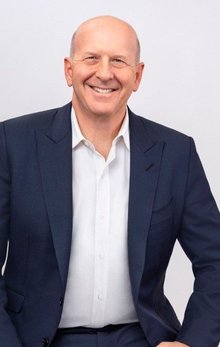
David Solomon
Chairman & Chief Executive Officer
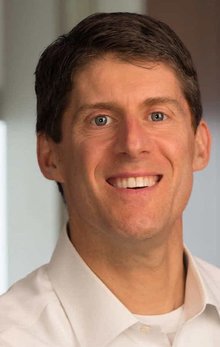
Stephan Feldgoise
Co-Head of Global M&A