
Why OpenAI thinks AI Investment Could Reshape the Economy

The integration of advanced AI into business operations could reshape the global economy, demanding new growth strategies that balance technological progress with workforce stability and equitable wealth distribution.
According to OpenAI's Industrial Policy for the Intelligence Age report, the technology has fundamentally altered enterprise operations by dramatically reducing the time required to complete complex tasks.
However, as the industry moves towards superintelligence – systems capable of outperforming even the most capable humans assisted by AI – questions around workforce displacement and economic disruption have become increasingly difficult to dismiss.
Dario Amodei, CEO of Anthropic, suggests this shift could be inevitable.
He writes that "AI could displace half of all entry-level white collar jobs in the next one to five years, even as it accelerates economic growth and scientific progress".
This potential for economic upheaval is precisely why OpenAI argues that the transition to superintelligence requires ambitious industrial policy.
"One that reflects the ability of democratic societies to act collectively, at scale, to shape their economic future so that superintelligence benefits everyone."
Balancing innovation with accessibility
OpenAI highlights that while AI integration could bring remarkable developments benefiting society, it simultaneously threatens to disrupt employment and potentially widen inequality gaps where wealth becomes concentrated among a few.
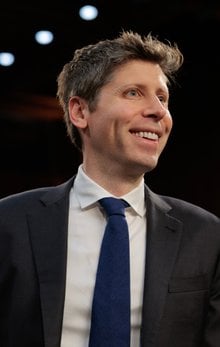
Sam Altman, CEO of OpenAI, frames the challenge succinctly: "AI will not replace humans. But humans who use AI will replace those who don't."

To address this, OpenAI proposes an easily accessed and participatory economy as a potential solution.
The company puts forward several ideas including giving workers a voice in the broader AI transition, financing new businesses to support a generation of AI-first entrepreneurs and treating AI as foundational in the modern economy, similar to literacy, to ensure capabilities are not excluded from any segment of society.
Sam notes: "I think when people talk about democratisation of AI, they mean two different things. One is shared access and making sure that everybody gets to use sufficient AI to improve their own lives, build things for other people, all that.
"And the other is a voice in where it is all going to go. I think both are important."
Rethinking taxation and work structures
The economic transformation driven by AI could require governments to fundamentally re-evaluate their tax base. OpenAI suggests implementing higher taxes on capital gains at the top, as well as taxing AI-driven returns.
The report also advocates for imposing taxes on automated labour, with policy clauses that incentivise firms to invest in human capital, allowing the AI economy to evolve alongside the workforce.
Perhaps most notably, the report proposes that enterprises trial a four-day (32-hour) workweek with no loss in pay. This could be achieved by converting efficiency gains from AI into either bankable paid time off or a shorter working week.

The report also calls for increased employee benefits including retirement, healthcare coverage or subsidised child and elder care.
Central to OpenAI's vision is the creation of a Public Wealth Fund, built on the principle that everyone should have a stake in AI-driven economic growth. This would see the benefits of AI-driven expansion distributed to citizens globally.
The concept is not entirely new. Anthropic, OpenAI's rival, alluded in December 2025 to creating "national sovereign wealth funds with stakes in AI," aimed at distributing "AI-derived wealth more equitably".
Beyond these people-centred proposals, the report emphasises the need for improved AI governance, guardrails and model containment playbooks to manage potentially dangerous systems.
The company acknowledges that this report represents only an opening position: "We offer these ideas not as fixed answers but as a starting point for a broader conversation about how to ensure that AI benefits everyone."


Executives

Dario Amodei
CEO and Co-Founder
Sam Altman