
How Will the UK's 2025 Autumn Budget Impact Businesses?
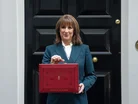
Chancellor Rachel Reeves has framed the UK's 2025 Budget around a clear message to business leaders: "If you build here Britain will back you."
The strategy places trade, logistics and supply chain resilience at the centre of economic policy, with particular emphasis on scale-up firms that currently generate half of Britain's jobs.
For the logistics and manufacturing sectors, the Budget presents a dual challenge: navigating £26bn in tax increases by 2029-30 while capitalising on infrastructure investment and energy cost reductions designed to strengthen competitiveness.
The Chancellor's approach represents a deliberate shift towards industrial strategy, recognising that supply chain stability has become a critical economic priority in the post-pandemic landscape.

Supporting scale-up business growth
Reeves has positioned the Budget to "match private enterprise with public ambition," signalling clear policy intent to retain and nurture growing businesses within the UK.
Her assertion that "we want them here not elsewhere" comes as the Office for Budget Responsibility (OBR) has highlighted persistent global trade risks, including potential tariff escalations from the US.
Updated government forecasts project GDP growth of 1.5% in 2025, exceeding the 1% anticipated earlier this year.
Medium-term outlooks have been adjusted downward, however, with economic expansion now expected to reach 1.4% in 2026, falling short of the previous 1.9% projection.
These revised projections reflect ongoing economic headwinds, including inflationary pressures and global market volatility that continue to affect business planning.
Fiscal policy decisions carry significant weight for the logistics sector. Kevin Green, Acting CEO of Logistics UK, has expressed concern that tax increases affecting fuel duty or business rates would prove "counterproductive" by driving up operational costs, particularly given that profit margins in the sector typically hover around just 2%.
The sector's vulnerability to cost increases stems from its role as a critical but low-margin link in the broader economy.
Infrastructure investment and productivity
Addressing the UK's persistently weak business investment levels, which remain among the lowest in the G7, stands as a central Budget theme. Reeves emphasises: "Low investment is the cause of the productivity problem, not the solution."
The Budget pledges increased capital investment, with particular focus on energy infrastructure.
Proposed measures aimed at reducing electricity prices for manufacturers could deliver much-needed relief for energy-intensive operations, while the commitment to "cut red tape on nuclear" seeks to streamline regulatory processes.
These energy initiatives acknowledge that high industrial electricity costs have long undermined UK manufacturing competitiveness compared to European and global rivals.
Defence procurement policy has been realigned to enable the UK to "buy British when it comes to national security", bolstering domestic manufacturers across steel and shipbuilding industries.
Business rates relief is being extended in targeted regions and sectors, including marine innovation and critical minerals.
This procurement shift aims to rebuild domestic industrial capacity while supporting strategic supply chain independence in critical sectors.
Managing tax and operational pressures
The Budget introduces several tax measures affecting businesses over the coming years.
Freezing tax thresholds on employer National Insurance contributions for three years from 2028-29 will raise £8bn.
Changes to pension contributions will see salary-sacrificed arrangements taxed, generating £4.7bn in revenue.
Corporation tax adjustments include reducing the writing down allowance main rate, raising £1.5bn.
The British International Freight Association (BIFA) has urged the Chancellor to prioritise practical measures that strengthen the UK's trading environment through reduced red tape, modernised border processes and workforce development initiatives.
More than £16m will be allocated to assist Northern Irish businesses in managing the Windsor Framework, including establishing a business concierge service, a trade resolution centre and AI-powered regulatory guidance.
Discussing the tax adjustments in a statement, John Wilkinson, Chief Operating Officer at BAM UK and Ireland, acknowledged that among businesses, the construction industry in particular “operates on tight margins” and contributes “£138bn to the UK economy”.
He said: “With inflation high, unemployment and rising and economic growth sluggish, restoring confidence is more urgent than ever if we want to get Britain building again.
“That means simpler rules, clearer regulation and fewer barriers to infrastructure projects that deliver jobs, energy and growth, backed by incentives, not tax hikes.”
Green economy transition opportunities
Kelly Becker, President for UK, Ireland, Belgium and The Netherlands at Schneider Electric, underscores the importance of governmental support in enabling green economy transition, noting: "The UK has a real opportunity to reap the rewards of the green economy, stimulating growth, encouraging innovation and creating thousands of skilled jobs for the future."
Through supporting scale-up businesses while prioritising energy, infrastructure and localisation, the Budget aims to secure economic stability via resilient logistics networks and a domestic industrial base equipped to meet global market demands.
Company portals




Executives

Kelly Becker
President for UK, Ireland, Belgium and The Netherlands
Kevin Green
Director of Policy, Marketing & Communications