
Will Trump and Xi's Deal Help Reshape Global Trade?
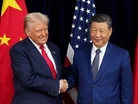
An agreement between US President Donald Trump and Chinese President Xi Jinping may have averted a potential supply chain crisis and its broader implications for global industries, reportedly securing the continued flow of rare earth elements.
The two leaders met to de-escalate trade tensions that had threatened the supply of these critical materials, widely used in modern manufacturing applications.
For business leaders concerned with sourcing stability and disruption to business-as-usual, the outcome of the talks may provide some reassurance.
The discussions resulted in the US agreeing to halve its “fentanyl tariff” on some Chinese goods from 20% to 10%.
In response, China has committed to making it easier for US companies to procure rare earth materials, a move that could preserve global supply chain stability and minimise manufacturing disruption.

The strategic importance of rare earths
Rare earth elements are a group of 17 metallic elements that are vital for modern manufacturing.
Their properties make them indispensable in products from smartphones and solar panels to the high-powered magnets used in electric vehicles and wind turbines. Any disruption to their supply has rapid and far-reaching consequences for high-tech value chains.
According to the International Energy Agency (IEA), China currently accounts for approximately 61% of global rare earth production and around 90% of processing – a market position that gives the nation influence over global supply.
Tensions initially grew when China considered imposing stricter export controls which would have required government approval for shipments.
The move prompted President Trump to threaten a 100% tariff on Chinese imports.
A spokesperson for China warned at the time: "Resorting to tariff threats is not the right way to engage with China. China's position on a tariff war has always been consistent: we do not want one, but we are not afraid of one."
Securing the flow of strategic material
The meeting between the two leaders appears to have navigated these tensions.
President Xi held a strong position due to China’s control over rare earth elements, a critical pressure point in the trade disputes.
Following the discussions, President Trump announced the outcome on his Truth Social platform, saying: "I had a truly great meeting with President Xi of China. There is enormous respect between our two countries.”
He added: “We agreed on many things...China has agreed to continue the flow of rare earth, critical minerals, magnets, etc., openly and freely."
While President Xi appeared more reserved pending official documentation, he acknowledged the need for action. He stated the two countries should “finalise follow-up work as soon as possible...and provide tangible results to set minds at ease about the economies of China, the United States and the world."
Diversifying trade beyond critical minerals
Beyond critical minerals the agreement extends to other sectors, signalling a potential broadening of supply chain cooperation.
The deal could see China increase its procurement of key US commodities which would diversify its own import sources.
"I was extremely honoured by the fact that President Xi authorised China to begin the purchase of massive amounts of soybeans, sorghum, and other farm products," Trump explained. "Our farmers will be very happy!"
Furthermore, a significant part of the agreement touches upon energy supply. "China also agreed that they will begin the process of purchasing American energy," Trump added.
"In fact, a very large-scale transaction may take place concerning the purchase of oil and gas from the great state of Alaska."
For China diversifying its supplier base to include the US could strengthen its own supply chain resilience. If these commitments are formalised, the meeting could represent a step toward a more stable trade relationship.