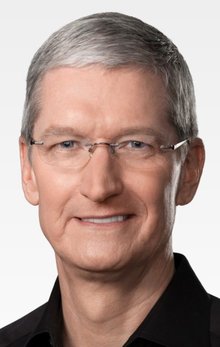
Why Apple's CEO is Investing in China Despite Trade Pressure

Tim Cook, Apple CEO, has said the company will be increasing its investment in China to continue growth within the country on his visit in October – despite ongoing clashes between China and US President Donald Trump on trade tariffs.
This comes at a time when Trump is seeking to promote manufacturing in the United States rather than elsewhere, and drive employment for American workers.
The tech giant has already made investment pledges to Washington, according to Reuters, saying it would invest US$100bn in domestic manufacturing.
In August 2025, Tim presented Trump with a custom US-made plaque commemorating Apple’s ‘American Manufacturing Program’ while making his investment announcement.
According to Reuters, an anonymous government affairs consultant from Shanghai said US companies are “wary of angering a White House that could hurt them at home in the world’s biggest consumer market for appearing too pro-China”.
He said that, at the same time, they are wanting to appear as though they are “in China, for China”.
Although Apple did not confirm an exact figure, Li Lecheng, the industry minister in China, told Tim that China hopes Apple will continue to explore the Chinese market and grow together with Chinese suppliers.
He added that the country will continue to foster a good business environment for foreign companies.
Companies caught in the China-US trade war
Tim has managed to steer Apple out of the way of US-China trade disruption, unlike other tech companies such as Nvidia and Qualcomm.
Nvidia has become a central figure in the escalating US-China trade war, as Beijing accused the American chipmaker of violating its anti-monopoly law.
According to Reuters, China's State Administration for Market Regulation (SAMR) announced on 15 September that a preliminary investigation found Nvidia had potentially breached commitments made during its 2020 acquisition of Mellanox Technologies.
That deal had been approved by China on the condition that Nvidia continue supplying advanced GPU chips to the Chinese market.
While the regulator did not specify how Nvidia violated the law, penalties could range from 1% to 10% of the company’s annual sales in China, which accounted for 13% of its global revenue last year.
Nvidia, in response, said it was "complying with the law and would continue to cooperate with all relevant government agencies as they evaluate the impact of export controls on competition in the commercial markets."
This move comes amid broader trade negotiations in Madrid, where semiconductors are a key topic.
US Treasury Secretary Scott Bessent called the timing “poor”, with analysts suggesting China is leveraging the probe to strengthen its negotiating position.
Zhengyuan Bo of Plenum said: "It's a warning that if the US export control paradigm operates in the same way as in the past several years there will be consequences, and China is willing to inflict damage on US companies."
Reuters reported that, on 10 October, China also initiated an investigation into US semiconductor manufacturer Qualcomm.
The country’s market regulator, which made the announcement, said the firm was suspected of violating China’s antitrust laws.

Apple in China
Data research firm IDC announced on 15 October that Apple’s shipments grew 0.6% in China from a year earlier - making it the only one of China’s three biggest vendors to increase shipments in this period.
This success is said to be boosted by the iPhone 17.
China’s ambassador to the US, Xie Feng, said during an event in Washington on Tuesday: “The business community has always been a stabiliser of China-US relations and a promoter of pragmatic cooperation” - Reuters reported.
As part of his visit to China, Tim visited Apple’s store in Shanghai and met Chinese game developers alongside the designer of Labubu dolls - showing his continued interest in building connections within the country.