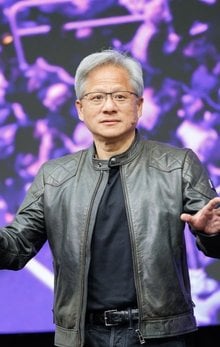
Nvidia CEO Jensen Huang on his one Regret in Business
From OpenAI partnerships to investment in the UK’s AI startup ecosystem, Jensen Huang has grown Nvidia into a global AI powerhouse.
So it may come as a surprise that one of the last words you’d expect from the CEO is “regret”.
In a recent interview with CNBC, he admitted he regrets not investing more heavily in Elon Musk’s AI startup xAI.
Although Nvidia is already an investor in xAI, which was founded in 2023, Jensen says he wishes he had increased his investment due to the track record of Musk’s transformative companies.
He told CNBC: “The only regret I have about xAI – we’re an investor already – is that I didn’t give him more money. You know, almost everything that Elon is part of, you really want to be part of as well.”
He added: “He gave us the opportunity to invest in xAI. I’m just delighted by that.”
A bold investment
Jensen made clear during the interview that Nvidia’s investment in xAI should not be confused with vendor financing, the practice of funding customers to purchase one’s own products, a tactic that raised concerns during past tech bubbles.
Rather than viewing xAI as a customer dependency, Jensen emphasised it was a bold investment in a promising future: “That’s an investment into a really great future company. And I’m really excited about that.”
In the interview, he grouped xAI with other new-generation AI firms like OpenAI and Anthropic, calling them part of a powerful wave of specialised AI companies building the infrastructure for a new digital era.

Unlike the dot-com era – which Jensen characterised as built on fragile business models and speculative valuations – today’s AI buildout is grounded in vast, existing enterprise demand.
“Back then, as you recall, there were Pets.com, Hospitals.com… all the internet companies combined were what, US$30bn, US$40bn in size?,” he said. “If you look at the hyperscalers now, that’s about US$2.5tn of business that’s already operating today.”
And it’s this US$2.5tn of real enterprise computing infrastructure that Huang sees transitioning to generative AI, powered by Nvidia’s GPU technology.
“We’ve got to build into half a trillion dollars worth of capacity infrastructure that’s already naturally growing by itself, and we’re in the beginning phases of that work.”
Where else is Nvidia investing?
While Nvidia’s CEO may regret not investing more in xAI, he’s not short of strategic bets across the AI ecosystem.
“We’re always looking for great startups to invest in,” he said, referencing his investment in CoreWeave, a US based AI cloud-computing company
Jensen explained that Nvidia’s investment thesis is closely tied to building out the AI stack — from hardware to applications.
He continued: “AI is several things. AI is energy, AI is chips, the models and the applications. You could look at me working across that entire stack of ecosystems around the world. And we need more energy. We need more chips. We need better models and more models. And we need a lot more applications.”
From Cursor – an AI software coder that Huang named in the interview as his “favourite enterprise AI service” – to OpenEvidence’s AI for digital nursing and medical diagnostics, Nvidia is positioning itself not just as a chipmaker, but as an active participant in the next wave of software and AI services.
“If I were to realise that the Cursor team was raising money before, I would have given them all of my money,” the CEO said.
Other portfolio highlights include robotics firm Figure and self-driving technology startups Wayve and Waabi.
Each plays a part in what Huang calls a “revolutionary technology” reshaping productivity across industries.
“There’s just an incredibly large set of new companies that are enabled by this revolutionary technology called AI,” Jensen concluded.
“These new companies are going to be future giants, and it would be great to be part of them, support their growth, and be part of that journey.”


Executives
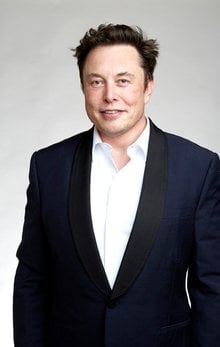
Elon Musk
Tesla CEO
Jensen Huang
Founder and CEO