
Inside Nvidia CEO Jensen Huang's UK 'AI Superpower' Plan
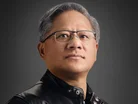
Jensen Huang is certain: the UK will become an AI superpower.
The CEO of Nvidia, one of the world’s largest companies powering the global AI revolution, told the BBC as much in an interview that saw him discuss the country’s technical strengths as well as its infrastructure limitations.
Huang’s words coincide with United States President Donald Trump’s state visit, during which meetings with Prime Minister Keir Starmer have opened the tap to massive investment from tech firms and closed the US$42bn Tech Prosperity Deal.

Google has confirmed a US$6.82bn investment into UK AI, while Microsoft has committed US$30bn to develop essential infrastructure – its largest investment outside the US, and a firm show of support for transforming the nation into a global hub for AI development.
When it comes to AI development, Prime Minister Keir Starmer and President Trump both pursue national AI leadership, as does China’s President Xi Jinping.
With all three governments seeking advantage in AI, the UK’s strategy relies heavily on US partnerships to deliver infrastructure and secure global standing – a fact that Huang well understands.
Closing the UK’s infrastructure gap
The Nvidia CEO says of the UK’s capabilities: “What’s missing is the AI infrastructure, and we are here to build it,” referring to the key role that the tech firm will play in delivering on the ambitions within the Tech Prosperity Deal.
Earlier in the year, at London Tech Week, Huang discussed the problem, saying: “It is surprising this is the largest AI ecosystem in the world without its own infrastructure.”
He sees an opportunity for the UK to accelerate development under favourable conditions, describing the situation as a “Goldilocks circumstance” – neither too restrictive or lenient.
To address the gap, Nvidia is partnering with British infrastructure firm Nscale to construct new data centres across the UK.
These facilities will play a critical role in supporting the servers needed for AI training and deployment.
“We’re building an AI infrastructure company here in the UK and then helping it scale out globally,” says Huang.
The boss has previously revealed an equity investment in Nscale, telling journalists at a London press conference “we convinced ourselves that Nscale could be a national champion for AI infrastructure in the UK.”
The new data centres will be built using Nvidia processors and focus on the high-volume computing power required by AI models.
Huang calls these data centres “AI factories” rather than traditional computing facilities, explaining “you apply energy to it and it produces something incredibly valuable – and these things are called tokens.”
Tokens are the units processed by AI systems to generate responses and outputs. Huang’s comments position these facilities as central to the economics of AI expansion in the UK.
Energy demands bring AI’s trade-offs into focus
The level of energy needed to run these types of data centres raises challenges.
Microsoft CEO Satya Nadella acknowledges that AI’s energy use remains “very high”, but says the technology brings measurable benefits in productivity, healthcare and public services.
According to Huang: “Using AI to solve problems will use less energy than using calculation to solve problems.” He gives the example of weather forecasting, where AI models can predict conditions “a thousand times more efficiently” than conventional systems.
To meet the energy demands of large-scale AI infrastructure, Huang says: “Nuclear is wonderful as one of the sources of energy, one of the sources of sustainable energy.
“We’re going to need energy from all sources and balance the availability and the cost of energy as well as the sustainability over time.”
In the short term, Huang proposes using gas turbines capable of operating independently from the national grid.
He also suggests that AI will eventually help design more efficient energy technologies, including solar panels, wind turbines and fusion systems, suggesting that “the productivity gains from AI will offset increased energy consumption.”

Manufacturing and supply chains underpin expansion
The construction of new data centres and increased demand for hardware requires reliable supply chains.
In particular, Huang highlights how exposed the chip industry is to geographic concentration, noting: “The ecosystem of manufacturers and suppliers to the chip industry is sprawling and complex and particularly concentrated in Asia.”
Speaking to analysts at Goldman Sachs, he says that companies must have “enough intellectual property” to shift manufacturing locations if needed, describing the process of managing supply chains as “a daily challenge requiring enormous scale and scope.”
Huang expects Taiwan to remain a manufacturing centre, saying, “We’re at the beginning of a breed of a new industry. This new industry builds AI factories.” He also predicts a global boom in manufacturing and supply chain activity as demand for AI systems accelerates.
In parallel, geopolitical tensions will likely affect access to the technology, with Huang saying he is “disappointed” by reports that China has ordered its technology firms to stop buying Nvidia chips. He argues, “The US needs to make sure that people can access this technology from all over the world, including China.”
Despite competitive pressures, Huang says, “The advance of human society is not a zero-sum game. President Trump is very clear. He wants America to win – and President Xi wants China to win – and it’s possible for both of them to.”