How Will Tech CEOs Inform Trump's AI Advisory Panel?
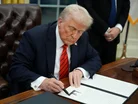
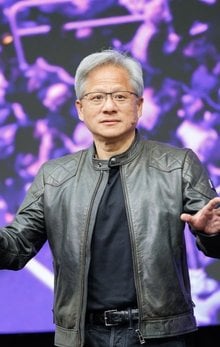
President Donald Trump has appointed Meta CEO Mark Zuckerberg, Oracle Executive Chairman Larry Ellison and NVIDIA CEO Jensen Huang to a government-led technology council to advise on AI regulation and other issues.
The President’s Council of Advisors on Science and Technology (PCAST) will play a key role in shaping the government’s response to intensifying global AI competition.
Previous White House technology advisors David Sacks and Michael Kratsios will serve as the council’s co-chairs.
Discussing the council in a statement to The Wall Street Journal, Mark Zuckerberg says: “The United States has the opportunity to lead the world in AI. I’m honoured to join the President’s council and work with other industry leaders to help make this happen.”
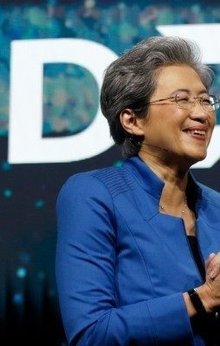
President Trump also plans to name an initial batch of 13 members from the industry, including Google Co-Founder Sergey Brin and AMD CEO Lisa Su. According to a White House-issued executive order from January 2025, the council could house a total of 24 members.
US-China competition
Under his second term, President Trump has highlighted AI development as a primary focus within his economic plan for growth.
Trump believes the advancement will play a key role in competing with China’s AI sector, describing the release of DeepSeek, China’s state-owned AI language model, “a wake-up call for our industries”.
Ensuring a regulated environment of AI and cryptocurrencies has been a defining strategy in positioning the US as a global leader in technological innovation.
“Under President Trump, PCAST will focus on topics related to the opportunities and challenges that emerging technologies present to the American workforce, and ensuring all Americans thrive in the Golden Age of Innovation,” the White House said in a statement.
Michael Dell, Co-Founder of Dell and a member of PCAST, mirrored the White House’s statement, saying: “The United States has the opportunity to lead the world in AI. I’m honored to join the President’s council and work with other industry leaders to help make this happen.”
Members across PCAST lead companies that have previously supported Trump with government contracts and have helped fund several of his personal ventures, such as private donations from Meta and Jensen Huang personally to fund the White House ballroom project.

AI-driven investment
The announcement of PCAST signals a strengthening alignment between the US government and major technology companies.
AI has emerged as a key driver of corporate investment in the past six years, with companies like Microsoft, Alphabet, Google and Meta collectively pledging US$650bn to accelerate the growth of the US technology sector for 2026.
Accelerations in AI spending and the bolstering of digital assets is part of what the White House describes as a plan for “American AI dominance”. The plan has seen Trump secure billions from tech leaders to build out AI infrastructure and commit to policies aimed at domestic energy to fuel data centres.
The willingness of corporate leaders to embrace advisory roles within the Trump administration marks a shift from his first term, which saw Trump call for boycotts with companies like Apple over its refusal to alter user privacy policies to assist US law enforcement.
Collaboration over confrontation
As the government continues to find ways to regulate AI without affecting innovation, the move to create PCAST comes at an important time for the US tech industry.
The European Union recently implemented the AI Act, a law designed to enforce risk-management, and China has taken a state-directed approach to AI development, two frameworks that US companies have considered restrictive.
Technology leaders in the US have pushed for lighter rules over AI, arguing that strict regulations could stifle experimentation that previously led to breakthroughs like Chat GPT-4 and Google Gemini.
Despite these concerns, they have also acknowledged the need to enact guardrails for safety, particularly around issues like deepfakes, election interference and autonomous weapon systems.
Previous administrations have been more combative with the regulation of the US tech industry, with the Biden government pushing for antitrust enforcement against Meta, Google and Amazon, a policy that proscribes unlawful mergers and business practices.
The announcement of PCAST reflects a relationship change between the industry and the government, indicating Trump is focusing more on collaboration than confrontation with US tech companies.






Executives
Jensen Huang
Founder and CEO

Larry Ellison
Co-Founder, Chairman and Chief Technology Officer at Oracle
Lisa Su
Chair & CEO
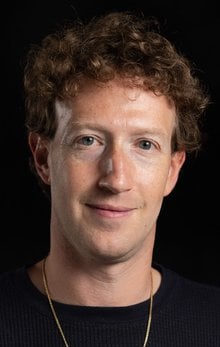
Mark Zuckerberg
CEO

Sergey Brin
Co-Founder