How is AI Growth Making Cybersecurity a Boardroom Priority?

Rapid advances in AI innovation and persistent geopolitical uncertainty are increasing the cybersecurity risks facing senior executives, according to the World Economic Forum's (WEF) latest Global Security Outlook impact report.
The report, which surveyed over 100 CEOs across industries and regions, finds that leaders of highly resilient organisations are most concerned about the security threat of AI-related vulnerabilities.
While businesses and leaders shift their operating strategies to embrace AI and wider innovations within their organisations, governance frameworks and human expertise are struggling to maintain the pace, says the WEF.
In this environment it says that leaders should focus their attention on strengthening cyber resilience as a business priority in order to protect vulnerable company data.

The challenge of AI data leaks
The WEF says that 94% of CEOs it surveyed anticipate AI to be the most significant driver of change in their approach to cybersecurity initiatives.
As organisations scale the use of AI through their day-to-day operations, the risk of accidentally exposing sensitive data rises.
When asked to rank cybersecurity issues related to adoption of Gen AI, 34% of CEOs told the WEF that their primary concern was data leaks, ranked above phishing and deepfakes (29%) and security of AI systems themselves (13%).
To manage this risk Chief Execs are prioritising the closer analysis and inspection of the tools their organisation uses, with 64% of respondents revealing they are assessing the security of their AI solutions, compared to 37% in 2025.
Conversely, the WEF says that organisations are also embracing AI to strengthen their cyber capabilities. In particular, the technology helps to augment detection, accelerate incident response and automate analytical tasks.
The impact of geopolitical instability
When asked what factors their organisations consider in an overall cyber risk strategy, 64% of CEOs chose geopolitically motivated cyber attacks, such as espionage or a disruption of critical infrastructure, as an option.
This is a more significant factor for larger organisations, as 91% of CEOs managing a company of over 100,000 employees have evolved their cybersecurity strategy as a direct result geopolitical volatility, compared to 59% of CEOs with a company of under one thousand employees.
In companies considered by the WEF to be more resilient, 48% of CEOs are mitigating geopolitical risks by increasing their collaboration with government agencies and information-sharing groups.
Based on the success of these initiatives, the report recommends that organisations take steps to strengthen their resilience through shared intelligence and partnerships, rather than tackle challenges in isolation.
Cyber-enabled fraud
Close to three quarters of respondents said that they or someone in their network had been impacted by cyber-enabled fraud in 2025.
Of this group, 62% said the person affected has experienced phishing, vishing or smishing attacks, with payment fraud and identity theft following behind at 37% and 32%, respectively.
Cyber-enabled fraud is a leading threat to businesses according to the WEF, with CEOs in Sub-Saharan Africa and North America most likely to have been impacted by these kinds of attacks.
To combat this, global initiatives such as the Global Fraud Summit, organised by the United Nations Office on Drugs and Crime and INTERPOL, are working with businesses to build international understanding and capabilities, empower organisations and victims of cyber fraud, and strengthening collaboration between businesses and government institutions.
The WEF encourages stakeholders and executives to embed user safety and ensure a rapid response is in place in order to disrupt cyber-enabled fraud.
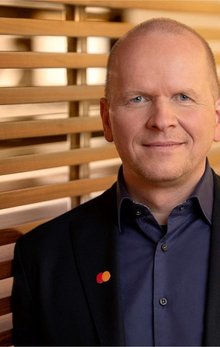
Discussing the impact of cyber attacks on businesses, Michael Miebach, Chief Executive Officer of Mastercard, told the WEF: “Cybersecurity is the foundation for our digital world. It is at the heart of trust and will allow society to fully benefit from the transformations enabled by new technologies like AI and quantum.
“But it’s not something one can do on their own. We have to come together, share intelligence globally and develop the skills equal to emerging risks. Society knows what’s at stake if we get this wrong.
“It’s critical that we get it right. If we do, we’ll be able to deliver on the many possibilities for so many people around the world.”
Company portals

Executives
Michael Miebach
Chief Executive Officer