
How Did Larry Ellison Earn his “CEO of Everything” Title?
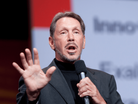
Nicknames are always tricky. Pick up a moniker at work and, at best, it can stick for the duration of your tenure. At worst, it’ll follow you into whichever role you take on next.
Who gives you that nickname matters, too. Is it a close colleague with a friendly jibe, someone from accounts getting a little close to the bone or – in Larry Ellison’s case – US President Donald Trump?
Of course, a man with as much influence as Ellison is unlikely to take offence at being publicly referred to as “the CEO of everything”.
Trump bestowed the title on the Oracle Executive Chairman, also a Republican supporter reportedly close to the President, at a January 2025 press conference to announce the US$500bn AI Stargate project.
OpenAI CEO Sam Altman and SoftBank chief Masayoshi Son were also present at the White House meeting.
“In the case of Larry, Larry Ellison, it’s well beyond technology, sort of CEO of everything,” said Trump. “He’s an amazing man and an amazing business person.”

World's richest man
A look at Ellison’s CV makes it hard to disagree with Trump.
While he may not be as much of a household name as the likes of Elon Musk – who he briefly surpassed as the world’s richest man in September 2025 off the back of an explosive rise in Oracle’s stock – he is widely influential in Silicon Valley and beyond.
Topping the rich list was a high-water mark in what has been a good year for Ellison.
Oracle has seen huge growth over 2025, cementing its position as a market leader largely due to the enormous demand for its cloud services, particularly in the AI sector.
His family has also widened its footprint in legacy media. Son David Ellison, the second wealthiest individual in the world, arranged the merger between Paramount Group and Skydance Media in August 2025, subsequently taking on the role of Chairman and CEO of the newly formed Paramount Skydance.
Oracle was a leading investor in Paramount Skydance, which includes the likes of Paramount Pictures, CBS, Paramount + and Pluto TV under his leadership.
There are also growing reports of an Oracle-led group emerging as a preferred buyer of TikTok US, subject to final approvals.
It comes after the US Congress passed a “divest or ban” statute in April 2024 targeting “foreign adversary controlled applications”. The law means TikTok must be owned by non-Chinese investors to continue operating in America.
In early September, the Wall Street Journal reported the US and China are finalising a framework that would see the social media brand’s US operations controlled by an investor consortium including Oracle, Silver Lake and Andreessen Horowitz.

Leading Oracle to market dominance
Ellison, 81, continues his dual role of Chairman and Chief Technology Officer at Oracle, the company he co-founded in 1977 inspired by an IBM paper on how to manage large databases and an initial contract with the CIA.
In 1979 the company, then called Relational Software Inc., shipped Oracle V2, the first commercially available SQL database – it took the oracle name in 1982 and listed on Nasdaq in 1986.
In the early 1990s, an accounting and sales crisis widely reported as “aggressive revenue recognition” brought challenges that Ellison later referred to as a formative lesson.
The company rest its processes and has seen enormous growth since, in line with aggressive AI adoption globally.
Through the 2000s Ellison added scale by acquisition: the hostile takeover of PeopleSoft in 2004 for US$10.3bn established Oracle as an applications power, while the purchase of Sun Microsystems in 2009 for US$7.4bn brought Java and a hardware business that underpinned engineered systems.
NetSuite followed in 2016 for US$9.3bn, giving Oracle a strong cloud ERP foothold with mid-market reach.
Ellison stepped down as CEO in 2014 to become executive chairman and chief technology officer, installing Safra Catz and Mark Hurd as co-CEOs.
From that vantage he pushed a cloud pivot, launching the Autonomous Database and building Oracle Cloud Infrastructure (OCI) to court compute-hungry customers.
Today he remains Oracle’s product architect and strategic dealmaker.
Under his watch the company has moved from database vendor to full-stack enterprise platform, spanning databases, applications and a fast-growing cloud.
Company portals

Executives
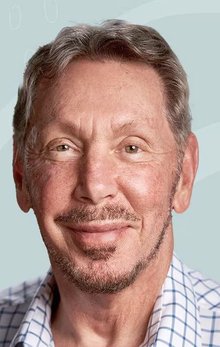
Larry Ellison
Co-Founder, Chairman and Chief Technology Officer at Oracle
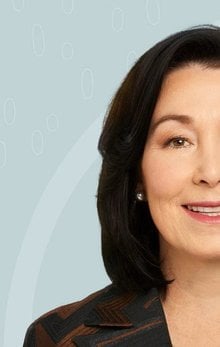
Safra Catz
Former Oracle CEO