How Is Kering's CEO Pushing For The Luxury Group’s Revival?
After consecutive years of declining sales from a prolonged hit to the luxury fashion industry, 2025 was a reset year for Kering, marked by lower revenues but stronger financial foundations, cost control and early signs of stabilisation.
The company is entering 2026 focused on reigniting growth, improving profitability and enhancing the appeal of its luxury brands.
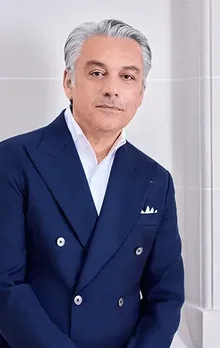
Discussing its 2025 results, released on 10 February, CEO Luca de Meo said: “2025 was the turning point we needed. It was the year we reset our course, made the tough but necessary decisions and laid the foundations for our rebound."
The first proof points are visible.
He added that Kering is progressing in 2026 “with a clear-eyed ambition and a fighting spirit” with the goal to “return to growth and rebuild our margins”.

Group financial results in 2025
Luca’s comments reflect the results. Total revenue was €14,675m (US$17.491bn), down 13% as reported and 10% on a comparable basis. Although Q4 also saw a decline, revenue was down 9% as reported and 3% on a comparable basis.
Net operating income was €1,631m (US$1.943bn), with a recurring operating margin of 11.1% versus 14.5% in 2024.
Recurring net income from continuing operations attributable to the Group was €523m (US$623m), while net income from continuing operations to the Group was under €29m (US$34.5m).
Overall, as of 31 December 2025, net debt was €8,000m (US$9.531bn), down €2,500m (US$2.978bn) year-on-year.
With Kering showing signs of improvement, Luca said in a company statement that the year’s performance “does not reflect the Group’s true potential”.
He added: “In the second half, we took decisive actions - strengthening the balance sheet, tightening costs and making strategic choices that lay the foundations for our next chapter.”
Leadership changes in Kering brands
Kering not only welcomed a new Group CEO in September 2025, it also refreshed leadership across key brands in a bid to reverse declining sales.
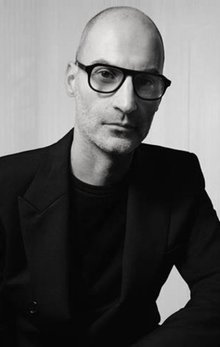
The Group appointed Cédric Charbit as CEO of Saint Laurent and Gianfranco Gianangeli as CEO of Balenciaga, with both appointments effective from the beginning of January 2025.
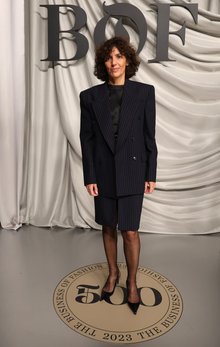
Cédric, previously CEO of Balenciaga, succeeded Francesca Bellettini at Saint Laurent, while Gianfranco moved from his role as Chief Commercial Officer of Saint Laurent to take the helm at Balenciaga.
Saint Laurent posted €2,600m (US$3.097bn) in revenue in 2025, down 8% reported and 6% comparable, but held profitability with €529m (US$630m) in recurring operating income and a 20% margin.
However, Kering’s flagship label Gucci continued to lag in Luca’s first quarter as CEO. Gucci posted a 10% decline on a comparable basis in Q4, while the other houses posted flat or moderate growth.
The Italian luxury brand also welcomed Francesca as its new CEO in 2025, tasked with strengthening Gucci’s identity.
Luca announced that Kering’s Capital Markets Day will be on 16 April, where the luxury goods conglomerate will “unveil a focused and ambitious roadmap, one designed to reignite momentum, strengthen the appeal of each of our Houses, and deliver sustainable, long-term value”.
“The future is not given; we craft it,” the CEO says. “And 2026 is the year we start to turn potential into performance.”