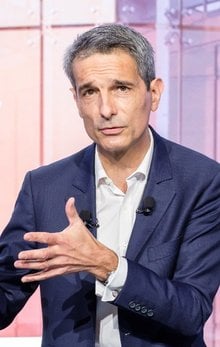
How Saint-Gobain CEO Benoît Bazin Leads Strategic Change

French construction materials giant Saint-Gobain is positioning India as a cornerstone of its global manufacturing strategy, with plans to expand capital expenditure and pursue further acquisitions in the country.
The move signals a broader shift in how multinational corporations view India's role beyond serving domestic demand.
CEO Benoît Bazin explained the company's long-term vision to CNBC, revealing that land acquisitions in India are now made with decade-long deployment strategies in mind. "We are building capabilities to export to Southeast Asia and to Australia," he says. "It's not only production for the domestic market anymore."
India's strategic manufacturing advantage
The strategic rationale behind Saint-Gobain's India expansion centres on the country's dual value proposition. Benoît told CNBC that the company's India business has doubled every five years, a growth trajectory he expects to accelerate further.
Beyond domestic consumption, India's geographic positioning offers access to emerging markets across Southeast Asia and Australia, transforming the country into a regional export hub.
Currently, exports represent approximately 5% of Saint-Gobain India's total output. However, Benoît told CNBC this figure can reach 15% within the next five years, reflecting a deliberate strategic pivot towards leveraging India's manufacturing cost advantages for international markets.
The company's expansion strategy demonstrates confidence in India's infrastructure development and skilled workforce availability, positioning the country as a competitive manufacturing base for global operations.

Building capabilities through acquisitions
Saint-Gobain's India strategy has been underpinned by systematic acquisitions since entering the market in 1996 through a majority stake purchase in Grindwell Norton. The company commissioned its first Float Glass plant in Sriperumbudur, Tamil Nadu in 2000, establishing its manufacturing presence.
The acquisition of British Plaster Board in 2005 integrated the Gyproc brand into Indian operations, securing market leadership in gypsum plasterboards. This strategic move strengthened the company's position in the construction materials sector.
Subsequent acquisitions included Winter Misra Diamond Tools in 1998, Carborundum Universal's Fused Refractories business in 2002 and Orient Abrasives' Bonded Abrasives division in 2006. These early acquisitions built the foundation for diversified product offerings.
More recently, the company acquired Chryso and Rockwool India in 2021, UP Twiga in 2021 and FOSROC in 2024, demonstrating continued commitment to the market and expanding its portfolio across construction chemicals and insulation solutions.
Infrastructure investment and capability development
The company's strategic infrastructure investments reflect its long-term commitment to India. Saint-Gobain Research India was established in Chennai in 2012 to develop solutions for hot and humid climates, with the Chennai Research Center inaugurated in 2016.
This localised research capability enables product development tailored to regional conditions across Asia.
The World Glass Complex in Rajasthan represents a significant capital deployment, with Saint-Gobain investing over US$185m in the 70-hectare industrial site.
The facility has the capacity to manufacture close to 1,000 tonnes of glass daily and is strategically located on the Delhi-Mumbai industrial corridor to serve the North India market.
A float launched in 2019 features high-tech furnace technology to reduce energy consumption, complemented by solar photovoltaic panels. The facility also produces India's first low-carbon glass, ORAÉ, using recycled content and renewable energy.
As of 2024, Saint-Gobain India operates more than 20 manufacturing sites across the country with nearly 10,000 employees and 82 manufacturing lines, serving both domestic and export markets.
The company's involvement in the Central Vista Project in New Delhi, where 11 different Saint-Gobain solutions are deployed across the US$1.9bn redevelopment, demonstrates the breadth of its product portfolio and market penetration.
The project, which began in 2019 and is scheduled for completion between 2026 and 2027, utilises Saint-Gobain's high-performance glass, plaster and plasterboard, construction chemicals and insulation solutions.
This flagship project showcases the company's integrated approach to large-scale infrastructure development.
Company portals

Executives
Benoît Bazin
Chairman and Chief Executive Officer