HSBC CEO: AI Will Create and Destroy Jobs

HSBC CEO Georges Elhedery says AI will create and destroy certain jobs across the financial industry, with the bank planning to retrain its workforce to embrace the coming shift.
Speaking at an HSBC investor day event beginning on 19 May, Georges said workers needed to embrace AI-driven change rather than resist it and work with the bank on navigating the new technology.
“We all know generative AI will destroy certain jobs and will create new jobs,” Georges said.
“But my initial mission is I need 200,000 colleagues with us on this journey. However many will be left at the end of the journey isn't the problem.
“The problem is how can we make sure that those 200,000 colleagues have been given all the capabilities, the training, the tools to make themselves future ready, be more productive versions of themselves.”
Georges also said HSBC staff needed to ensure they were “not fighting” the bank over these developments and weren’t “resisting the change”.
He added that getting the bank “future ready” was his top priority as it recognised the “enormous opportunity” in AI.

The rush to save costs and drive automation
Georges’s points on AI and its future impact comes a day after HSBC rival bank Standard Chartered announced plans to cut thousands of jobs worldwide over the next few years, making it the first global bank to explicitly connect job cuts with AI adoption.
Speaking at a Hong Kong investor event on 19 May, Standard Chartered CEO Bill Winters said the bank plans to replace “lower-value human capital” with technology and other investments.
“We don’t have job losses, but we do have job role reductions in favour of the machines,” Bill told the event’s audience, “and that will accelerate as we go forward into AI”.
He added that the jobs affected were mostly non-client facing.
The bank said it plans to cut 15% of its corporate function roles by 2030, which could see more than 7,000 redundancies across its 80,000-employee workforce worldwide.
These comments from HSBC and StanChart highlight a common trend among financial institutions, with global banks increasingly looking to cost-saving measures amid the rush to integrate frontier AI models.
Empowering employees and customers with AI
In March 2026, HSBC appointed David Rice as the company’s first Chief AI Officer, which further highlighted the bank’s AI strategy and its goal of increasing returns through cost savings and automating and streamlining its operations.
During an earnings call in February 2026, Georges said generative AI was one of the bank’s most important investment areas, with plans to use the technology for employee assistance, process reengineering and customer experience.
“Our ambition here is simple – we will empower our colleagues to use AI to create a personalised experience for each customer, deliver it safely, in real time and at scale, while keeping human judgement, decision-making and accountability at the core,” Georges said on the call.
The bank’s onboarding and Know Your Customer function, financial risk and monitoring, contact centres, and wealth management, are also undergoing an AI transformation, according to an investor presentation during the event.
According to data from McKinsey, global banks plan to substantially increase AI investments over the next few years. The data estimates that generative AI could add between US$200bn and US$340bn in value annually across the entire banking sector.
Company portals


Executives
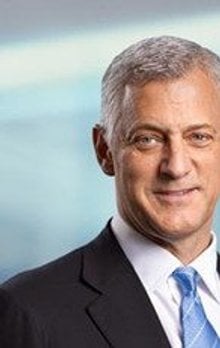
Bill Winters
Group Chief Executive
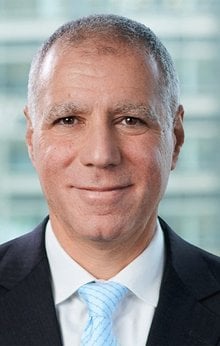
Georges Elhedery
Group CEO