
Why HSBC Georges Elhedery Wants to Kill Complexity

In an interview with Bloomberg, CEO of HSBC Georges Elhedery described himself as “ruthless about killing complexity” while driving the company’s goal of transforming how the bank utilises AI.
Discussing the role of AI within the company and his leadership strategies, Georges spoke about the importance of investing in HSBC’s employees, their skills and capabilities as well as the effects Gen AI will have on both colleagues and customers.
“Gen AI is clearly bringing something new to the equation,” said Georges. “We have more than 100 cases, of which about half are already live in production, that are transformational. And they're going to change the way we as humans operate.”
This refocusing of the company’s AI narrative coincides with David Rice’s appointment as Chief AI Officer, the first ever position of its kind at HSBC.
Georges stated he was “humbled and honoured” to have been appointed as Group CEO in 2024 and discussed HSBC’s future plans for growth, most notably the advancement of its AI capabilities.
“There’s massive potential in this bank. Some of it needed to be unleashed. It needed to be unlocked,” he added.
Adapting to new demands
Georges’ comments come at an important time for the company.
On 23 March, the bank appointed David to the Chief AI Officer role and just days prior, Bloomberg reported that the bank could potentially cut up to 20,000 jobs — 10% of its total staff.
Many of these cuts would affect non-client-facing positions, though no final decisions have been made.
Both the decision to hire for an AI-focused role and the potential laying off of employees mirrors the bank’s aim to realign its AI framework, streamline management operations and cut down costs as it enters its next stage of growth.
Discussing the rush to innovate and develop the firm’s internal systems, Georges said the restructuring would be done “in the most respectful way for the benefit ultimately of the firm and its customers”.
In addition to David’s role as Chief AI Officer, HSBC has already deployed AI tools capable of generating text, code or summaries from prompts on a company-wide scale.
The bank has already expanded Chief Technology Officer Mario Shamtani’s responsibilities, tasking him with developing a central AI platform.
“The world is moving fast. We need to move fast. Our customers are moving fast. Their needs today will be different tomorrow. Their goals today will be different tomorrow. And we need to be continuously adapting to their evolving needs and their evolving goals,” Georges added.
HSBC’s role in global markets
The bank has recently linked this push for innovation to stricter financial goals.
In February this year, following its 2025 earnings report, it increased its tangible equity target to 17% through 2028, despite a 7% drop in pretax profit US$29.9bn, hit by US$4.9bn in one-off charges.
The restructuring process isn’t just down to AI. In February, HSBC began the sale of its Singapore life insurance manufacturing arm, a business that has an estimated value of more than US$1bn.
This also comes after the bank’s removal of 11 businesses from its portfolio in 2025, with Georges stating on an earnings call that the move aimed to review strategies and refocus ambitions.
“Our ambition is always to be as a leader in what we do, or let others do it better than us and not be there,” Georges said, discussing the sale in Singapore.
In Bloomberg’s interview, Georges added to the discussion of trade, highlighting how corridors are shifting, the subsequent opportunities being created and how the bank is navigating political tensions.
He said that based on HSBC’s internal research, the reconfiguration of trade patterns, such as the shift to multi-regional supply chains in Asia, will drive foreign direct investment, employment, domestic growth and trade.
Georges added that international customers are looking for resilience in their supply chains and for consumer markets to assist in the scaling of capabilities for their products and services.
He concluded the interview saying that the bank has a “critical role to play” in how products and services are scaled across all consumer markets and going forward, plans to ensure HSBC continues its goal of being a “simple, more agile, focused bank”.
Company portals

Executives

David Rice
Chief AI Officer
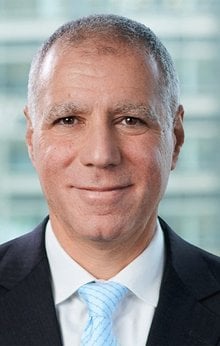
Georges Elhedery
Group CEO
Mario Shamtani
Group CTO