Dow CEO Warns of Trade Disruption Driven by Iran Conflict
As the war in Iran intensifies, prices for petrochemicals have spiked following global supply chain shortages.
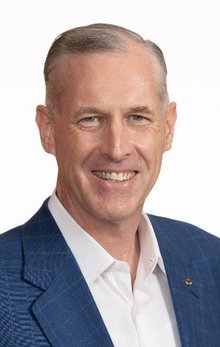
Dow’s CEO Jim Fitterling says consumers can expect this scarcity to create inflationary effects for construction materials and consumer goods among other import products.
He has also warned that price increases and shortages driven by the conflict could last through to the end of 2026.
While a large portion of the supply chokehold is on oil, natural gas and fertiliser, almost 20% of the global petrochemical capacity is blocked due to the closure of the Strait of Hormuz.
Almost US$25bn worth of petrochemical products pass through the Strait annually and continued disruptions could impact the consumer if producers decide to push for higher costs, on account of supply scarcity.
Jim predicts that, even when the strait reopens, it could take months to process and ship backed-up stores of plastics and petrochemicals.
“The die is being cast for the rest of the year for what’s going to happen in the markets,” he said at the CERAWeek by S&P Global conference in Houston. “It’s like the unwind we saw on supply chains during COVID.
“You could be in the 250- to 275-day [range]. This is not going to be an instantaneous rewind.”
While plants in the US largely rely on natural gas-derived ethane – a product not directly affected by the Middle East conflict – Asian and European markets depend on Middle East-sourced petrochemicals, like crude oil-based naphtha.
As almost half of Asia’s naphtha supplies flow through the Strait of Hormuz, many plants are declaring force majeure and are cutting production.
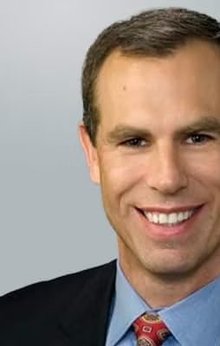
Kurt Barrow, S&P Global Energy Vice President for Oil, says: “We’re seeing the force majeure of plants in Asia, but we’re not yet seeing the shortages at Home Depot. But there is that potential. Chemicals go into everything.”

Commodity price inflation
Around 150 supply ships pass through the Strait of Hormuz every day. If the Strait reopens, Jim predicts only 15 ships will be able to pass through daily.
This reduced process will prioritise oil and gas as more than 300 of the approximately 450 stranded vessels are carrying oil. Once these vessels have passed through, priority will then be given to vessels carrying fertiliser for agricultural and food supplies.
Discussing the priority of shipments, Jim says vessels supplying petrochemicals “will be somewhere down the list” and the ones travelling to Asia will take an additional four weeks.
So far, these delays resulted in the base commodity petrochemical pricing arbitrage between the US and Asia to rise from US$500 per metric tonne to more than US$1200.
“We have to navigate a two-speed economy; we have to navigate massive geopolitical disruption,” Jim adds. “The volatility is off the charts right now.”
Supply scarcity
As Asian countries like South Korea and Japan announce economic strategies to reduce the war’s impact, energy CEOs like Wael Sawan of Shell have voiced warnings to Europe over the scarcity of energy supplies.
On 10 February, Wael warned governments to not take actions that could magnify the impact of supply disruptions, adding that you can’t have “national security without energy security”.
“South Asia was first to get that brunt,” he adds, discussing regional supply disruptions. “That's moved to Southeast Asia, Northeast Asia and then more so into Europe as we get into April.”
All 32 of the International Energy Agency’s members have agreed to a record release of 400 million barrels in emergency oil reserves to tackle soaring prices and supply shortages.
This is more than double the previous record amount released by the IEA’s members following Russia’s invasion of Ukraine in 2022.
However, this would only amount to three or four days’ worth of global supply, roughly a fortnight’s worth of what would regularly be shipped out of the Strait of Hormuz.
A competitive edge
In theory, this could be good news for US petrochemical producers.
In recent years, Dow has diversified its growth, with the company establishing major operations across Asia, including several partnerships with companies in the Middle East, such as its shared chemical plant with Al-Hejailan Group in Saudi Arabia.
The petrochemical sector has seen an industry-wide downturn in recent years and in January 2026, Dow announced a company transformation plan that aims to achieve US$2bn in savings.
Following the announcement and a surge in demand caused by the Middle East conflict, Dow’s stock has increased by 70%.
Despite gaining a competitive edge, Jim remains critical of the market’s volatility. He hoped that lower interest rates “would stimulate more housing demand”, but the inflation caused by the conflict is likely to increase interest rates again and result in slower economic growth.
“The US is in a really advantageous position,” Kurt adds. “Those [ethane] crackers are running as hard as they can to supply the market, but the reality is there’s not enough spare capacity in the world to make up that gap.
“We’re going to have the haves and have nots.”
Company portals



Executives
Jim Fitterling
Chair, Board of Directors
Kurt Barrow
Vice President for Oil
Wael Sawan
Chief Executive Officer