
Inside Sam Altman's $110bn Growth Plan for OpenAI
OpenAI’s ambition to “scale AI for everyone” has gathered pace with a US$110bn investment that lifts its pre-money valuation to US$730bn.
The funding comprises US$30bn from SoftBank, US$30bn from NVIDIA and US$50bn from Amazon.
Alongside the capital injection, the company has signed a strategic partnership with Amazon and secures next-generation inference compute with NVIDIA.
The agreements centre on compute, distribution and capital. OpenAI identifies these three elements as essential to meeting demand from consumers, developers and businesses that integrate AI into their daily operations.
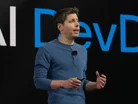
Sam Altman, Co-Founder and CEO of OpenAI, says: “We’re pushing the frontier across infrastructure, research and products to make AI more capable, reliable and broadly useful.
"SoftBank, NVIDIA and Amazon are long-term partners who share our ambition to turn real scientific progress into systems that deliver meaningful benefits for people at global scale. Building AI that works for everyone will require deep collaboration across the stack and we’re excited to do this together.”

The latest valuation also lifts the OpenAI Foundation’s stake in OpenAI Group to more than US$180bn, strengthening the non-profit’s capacity to fund work in areas including health and AI resilience.
Product scale and enterprise uptake
OpenAI points to growth across its product portfolio as evidence of scale. Codex, its software engineering model, brings what the company describes as the power of a top engineer to individuals building software.
Weekly Codex users have more than tripled since the start of the year to 1.6 million. Using the technology, individuals can create, automate and ship software that once required a full engineering team.
At the same time, more than nine million paying business users rely on ChatGPT at work.

Startups, enterprises and governments build on the OpenAI platform to redesign how products and services are created and delivered. Many organisations begin with individual productivity use cases before extending adoption across engineering, support, finance, sales and operations.
As frontier AI moves from research into global deployment, OpenAI positions its Frontier platform as infrastructure for enterprise-scale implementation.
Frontier enables organisations to build, deploy and manage AI co-workers at scale. In practice, this means integrating AI systems into existing workflows without managing the underlying infrastructure that supports model training and inference.
Inside the Amazon alliance
OpenAI and Amazon have entered a multi-year strategic partnership designed to accelerate AI innovation for enterprises, startups and end consumers. Amazon’s US$50bn investment begins with US$15bn, followed by US$35bn when certain conditions are met.
“OpenAI and Amazon share a belief that AI should show up in ways that are practical and genuinely useful for people,” explains Sam Altman, Co-Founder and CEO at OpenAI.
“Combining OpenAI’s intelligence with Amazon’s infrastructure and global reach helps us put powerful AI into the hands of businesses and users at real scale.”
A central element of the partnership is joint development of a stateful runtime environment powered by OpenAI’s models and delivered through Amazon Bedrock.
A stateful runtime environment allows AI systems to retain context over time. Developers can track prior interactions, access memory, use identity systems and connect to compute resources without losing continuity between tasks.
These environments are trained to run on Amazon Web Services infrastructure and integrate with Amazon Bedrock AgentCore and other infrastructure services. The intention is for AI applications and agents to operate alongside other applications within AWS.
As part of the agreement, AWS becomes the exclusive third-party cloud distribution provider for OpenAI Frontier. This expands access to OpenAI’s enterprise platform as demand for AI deployment grows across industries.
OpenAI and AWS have also expanded an existing US$38bn multi-year agreement by a further US$100bn over eight years.
OpenAI plans to use around two gigawatts of AWS Trainium capacity, spanning Trainium3 and next-generation Trainium4 chips. Trainium4, due from 2027, is set to deliver stronger FP4 performance and greater memory bandwidth and capacity.
Andy Jassy, President and CEO of Amazon, says: “We have lots of developers and companies eager to run services powered by OpenAI models on AWS, and our unique collaboration with OpenAI to provide stateful runtime environments will change what’s possible for customers building AI apps and agents.
"We continue to be impressed with what OpenAI is building and we're excited not only about their choosing to go big on our custom AI silicon (Trainium), but also our opportunity to invest in the company and partnership over the long-term."
Expanded NVIDIA collaboration
OpenAI is also extending its longstanding collaboration with NVIDIA.
The agreement includes three gigawatts of dedicated inference capacity and two gigawatts of training capacity on Vera Rubin systems. These build on Hopper and Blackwell systems already operating across Microsoft, OCI and CoreWeave.
Inference refers to the process by which a trained AI model generates outputs from new data, while training involves teaching the model using large datasets and specialised compute systems.
Jensen Huang, Founder and CEO of NVIDIA, says: "Artificial intelligence is the most consequential technology of our time and OpenAI is at the forefront.
"We have been privileged to partner with OpenAI since its earliest days, as it delivered one breakthrough after another. Together, we will continue to push the frontier – building the infrastructure for the age of AI and scaling its benefits to serve industries and societies worldwide."
Company portals




Executives
Andy Jassy
President and CEO
Jensen Huang
Founder and CEO

Sam Altman