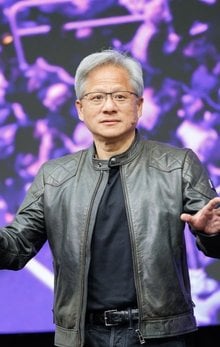
Jensen Huang: AI Predictions are 'Hurtful' for the Economy

According to Jensen Huang, CEO of NVIDIA, predictions that AI could wipe out jobs are not just incorrect – but could also damage future business prospects.
Speaking to the Special Competitive Studies project, he said that these predictions – specifically predictions around the longevity of some technology jobs – could actually be “hurtful” for the economy.
“If we convinced all the young college graduates not to be software engineers, and it turns out the United States needs more software engineers than ever, that’s hurtful,” he said. “So we have to be mindful of how we communicate the importance of this technology and what it’s able to do.”
His comments follow the news that 80,000 tech employees were laid off in the first quarter of 2026 – with nearly half of those layoffs being attributed to AI.

AI layoffs increase
Discussing these predictions, Jensen said that CEOs in particular need to be careful when talking about the impact of AI.
Comments about AI, he said, are often “made by people who are like me, CEOs,” he said. “And somehow, because they became CEOs you adopt a God complex, and before you know it you know everything. “And so I think we have to be careful and really ground ourselves to talking about the facts.”
Many business leaders have already made significant alterations to their workforce because of AI – such as Meta, which has announced plans to cut 8,000 jobs following AI investment.
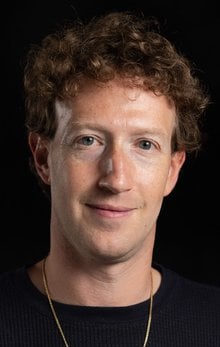
Mark Zuckerberg, CEO of Meta, said of the cuts: “We basically have two major cost centers in the company: compute infrastructure and people-oriented things.
“If we’re investing more in one area to serve our community, then that means we have less capital to allocate to the other. So that means we do need to take down the size of the company somewhat.”
Fintech firm Block also cut 40% of its workforce, with CEO Jack Dorsey saying that: “Intelligence tools have changed what it means to build and run a company. A significantly smaller team, using the tools we're building, can do more and do it better.”
An ‘unusually painful’ impact
Other leaders have suggested that these cuts are likely to become more and more prevalent. Dario Amodei, CEO and co-founder of Anthropic, warned in an essay that he believes AI could cause an “unusually painful,” disruption of jobs.
He wrote: “New technologies often bring labor market shocks, and in the past, humans have always recovered from them, but I am concerned that this is because these previous shocks affected only a small fraction of the full possible range of human abilities, leaving room for humans to expand to new tasks.
“AI will have effects that are much broader and occur much faster, and therefore I worry it will be much more challenging to make things work out well.”
Jensen responded at the time at a press briefing in Paris, where he said: “One, he believes that AI is so scary that only they should do it. Two, [he believes] that AI is so expensive, nobody else should do it. And three, AI is so incredibly powerful that everyone will lose their jobs, which explains why they should be the only company building it.
“I think AI is a very important technology; we should build it and advance it safely and responsibly. If you want things to be done safely and responsibly, you do it in the open. Don’t do it in a dark room and tell me it’s safe.”




Executives

Dario Amodei
CEO and Co-Founder

Jack Dorsey
Jensen Huang
Founder and CEO
Mark Zuckerberg
CEO