NVIDIA's Jensen Huang Aims to Reassure Workers Over AI Shift
Leaders in the technology industry seem to be at odds with how AI will affect the world of work.
Some CEOs believe white-collar work will be a thing of the past, such as Anthropic CEO Dario Amodei’s suggestion that AI could eliminate entry-level white-collar jobs within five years, saying the technology will be “better than humans at almost all intellectual tasks” in a CNN interview.
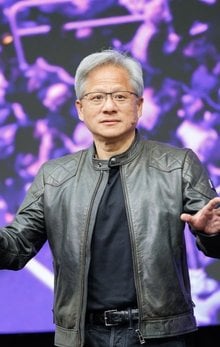
NVIDIA CEO Jensen Huang, however, believes that AI agents will more likely resemble overly scrutinous managers rather than serve as a replacement for employees.
“Your [AI] agents are harassing you, micromanaging you, and you’re busier than ever,” Jensen said during a panel at the Stanford Graduate School of Business.
“We’re doing things faster; we’re doing it at a larger scale; we’re thinking about doing things that we never imagined.”

The incoming AI revolution
Jensen has been outspoken on the narrative that AI will result in the destruction of human-centric work.
“My belief is we’re gonna create more jobs in the end,” he added.
“There’ll be more people working at the end of this industrial revolution than at the beginning of it.”
While NVIDIA and other tech companies have seen success following the integration of AI technologies into their operations, employees across all industries have been at the forefront of change brought about by AI.
Companies like Meta are currently weighing the possibility of reducing workforce numbers to offset AI costs and potentially improve operational efficiency by automating more simple tasks.
According to Nikkei Asia, nearly half of all layoffs in the tech industry have been attributed to AI in the past few months, with almost 80,000 jobs cut in the first quarter of 2026.
In contrast to these concerns, Jensen believes that while chatbots and AI agents are building on their capabilities – such as the ability to write code, manage schedules and organise data – the technology will allow for greater human work, not less of it.
“The fact that we now have AI assistants [to] help us, we could explore more space, do better work, do things at a greater scale, do things more cost-effectively, do things better,” Jensen added.
AI Anxiety among workers
The instability of the US labour market has resulted in an increase of shared anxiety among workers.
According to a 2025 report by ADP Research, only one in five workers felt their jobs were safe from elimination, and some are actively rebelling against the technology shift altogether in hopes of impacting AI use throughout global industries.
Despite these anxieties, Jensen has attempted to reassure those uneasy about AI integration.
He believes that the technology shift won’t be unlike other historic industry changes and that humans will be better off in the long run because of it, citing the Industrial Revolution as an example.
“[What] I want to make sure we all do, is to recognise that people are really worried about their jobs,” Jensen said on the Lex Fridman Podcast in March.
“I just want to remind them that the purpose of your job, and the tasks and tools that you use to do your job, are related, not the same.”



Executives

Dario Amodei
CEO and Co-Founder
Jensen Huang
Founder and CEO